
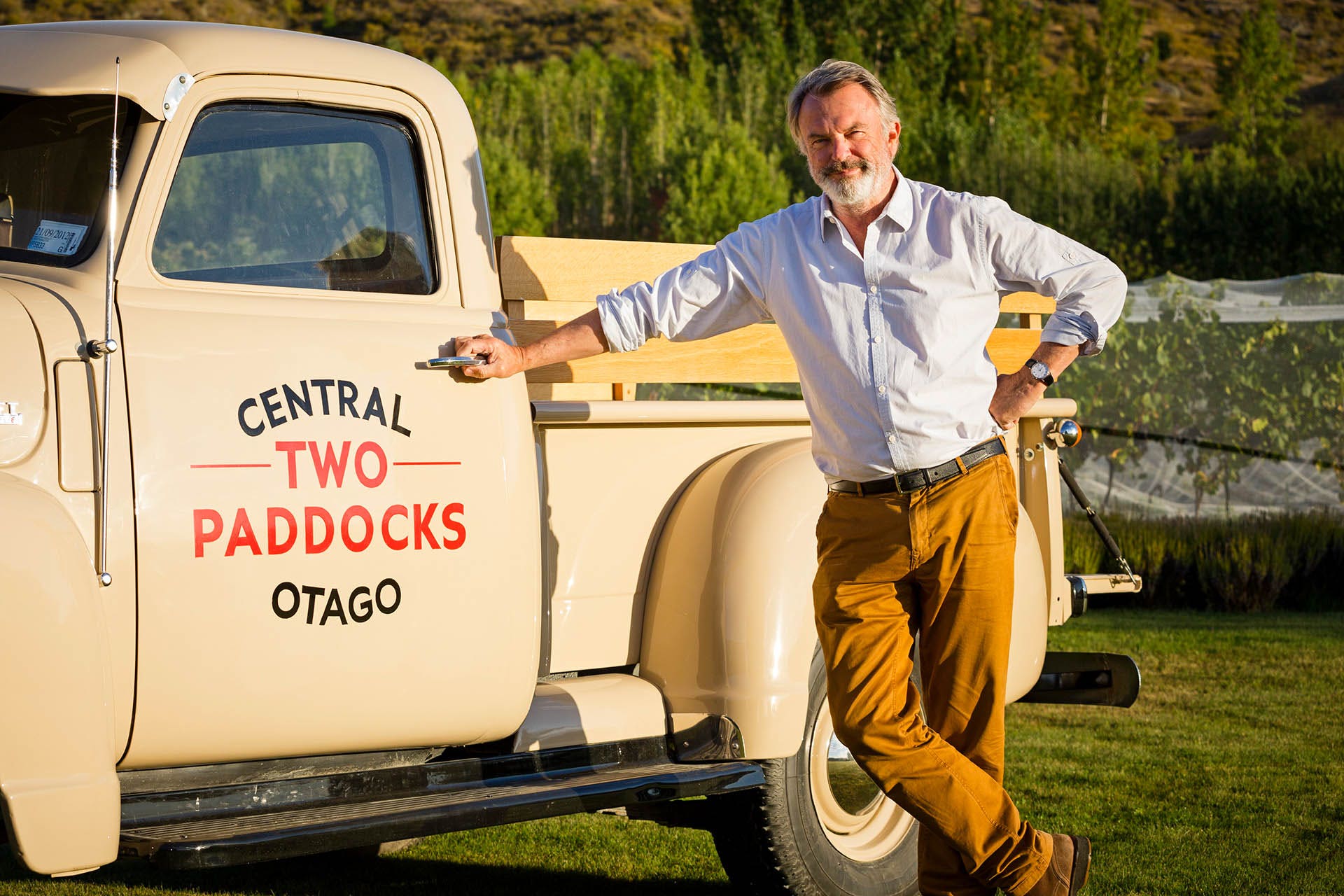
Spring is bringing new growth to Sir Sam Neill’s beloved Two Paddocks winery, where the next chapter is unfolding among the vines, native trees and animals that made his Central Otago retreat so personal.
PHOTO: Sam Neill. Wine Enthusiast.
In an interview with RNZ’s Saturday Morning, general manager Jacqui Murphy described a property balancing grief with the practical demands of another growing season. Preparations for the 2027 vintage are underway, while the team continues caring for the landscape Neill spent years shaping.
Her account offers a glimpse beyond the famous name attached to the wine label. Two Paddocks is a working rural property, with weather risks, skilled staff and a collection of small, deeply personal traditions.
For property enthusiasts, it also tells a story about what long-term ownership can create: a place whose identity grows with the person who cares for it.
A Central Otago vineyard with a personal history
Two Paddocks began in 1993, developing from a small family wine venture into an organic Central Otago producer. Its origins were rooted in making wine to enjoy with family and friends. Homepage
That connection between international success and a distinctly New Zealand home was explored in Property Noise’s earlier feature, Remembering Sir Sam Neill: The New Zealand Icon Who Found His Greatest Joy Among the Vines of Central Otago.
RNZ’s latest report brings the story back to the everyday life of the property: watching the weather, tending new growth and preserving the details that made it Neill’s retreat.
Spring brings new growth—and frost risk
Central Otago’s scenery provides a spectacular setting, but spring is a demanding period for the vineyard team.
Murphy told RNZ that once buds open and tender shoots emerge, frost becomes a major concern. Protecting that growth is part of the work required before the next vintage can take shape.
The cold has already affected the farm’s apricots. According to Murphy, approximately 80 per cent of the crop on four apricot trees has been lost.
That figure relates to the small apricot planting, rather than the vineyard’s grape harvest.
The loss has a personal significance. Neill enjoyed turning the fruit into homemade jam, and Murphy said some jars of his preserves remain in the cupboard.
It is a modest detail, but an evocative one: something made by hand at home, still being shared after his passing.
Organic growing depends on the people behind the wine
Murphy also highlighted Neill’s preference for keeping production as organic as possible.
That approach places considerable responsibility on the people tending the vines. Maintaining healthy plants and producing quality grapes requires experience, observation and careful decisions throughout the season.
Her comments draw attention to the viticulturists whose work happens well before a bottle reaches the table.
For readers interested in vineyard properties, this is an essential part of the story. A beautiful setting comes with an operating landscape that needs continuous care, investment and skilled labour.
At Two Paddocks, those responsibilities continue as the team works towards the next harvest.
Native planting changed the character of Red Bank
Some of Neill’s most lasting contributions can be seen beyond the vineyard rows.
Murphy told RNZ that Red Bank, the headquarters of Two Paddocks, had previously been a horticultural research farm. It retained an unusual assortment of plants, including lavender varieties, medicinal botanicals and fruit trees.
Neill preserved much of that character while adding shelter belts and thousands of native plantings.
According to Murphy, he had been struck by the absence of native trees and birds when he bought the farm. Over time, the planting helped bring back tūī, bellbirds and other birdlife.
The result was a property he could watch changing around him—a retreat shaped through years of attention.
That relationship between home, green space and personal priorities also features in Property Noise’s coverage of Lucy Lawless’ New Zealand property journey, which discusses her connection to Auckland and environmentally focused gardens. propertynoise.co.nz & propertynoise.com.au
Animals and local art keep his presence close
The farm’s personality extends to its animals.
RNZ reported that pigs Brian and Amy continue to thrive, maintaining a connection with the rural life Neill frequently shared with his followers.
Inside the clubhouse, another part of his influence remains on the walls.
Murphy recalled him returning with paintings and a hammer, rearranging artworks and adding pieces that interested him. Many were by local or emerging artists, chosen for their character and the stories behind them.
Together, the animals, artwork and planting give Red Bank an identity that could never be captured by a property valuation alone.
Could visitors experience Red Bank this summer?
There may also be an opportunity for more people to see the property.
Murphy told RNZ that access currently includes certain Two Paddocks Wine Club members. The team is considering organised tours, potentially beginning in December 2026, to share Red Bank Farm and Vineyard and explain what Neill created there.
Those plans remain provisional, with further details still to come. Visitors should check Two Paddocks’ official announcements before making arrangements.
For more stories about the homes and retreats of well-known New Zealanders, explore Property Noise’s celebrity property news.
A legacy growing with the landscape
The next Two Paddocks vintage will depend on the familiar combination of weather, patient work and decisions made throughout the season.
But RNZ’s account shows that Neill’s legacy reaches beyond the wine.
It lives in the native trees, returning birds, animals, artwork and everyday routines of a property he made his own.
As spring growth gathers pace, the team’s work carries that connection forward—one season at a time.
Source: RNZ, Saturday Morning, “Sir Sam Neill’s legacy lives on in Two Paddocks’ next harvest”, by Dan Satherley, published 3 October 2026. This article draws on the RNZ report supplied.