
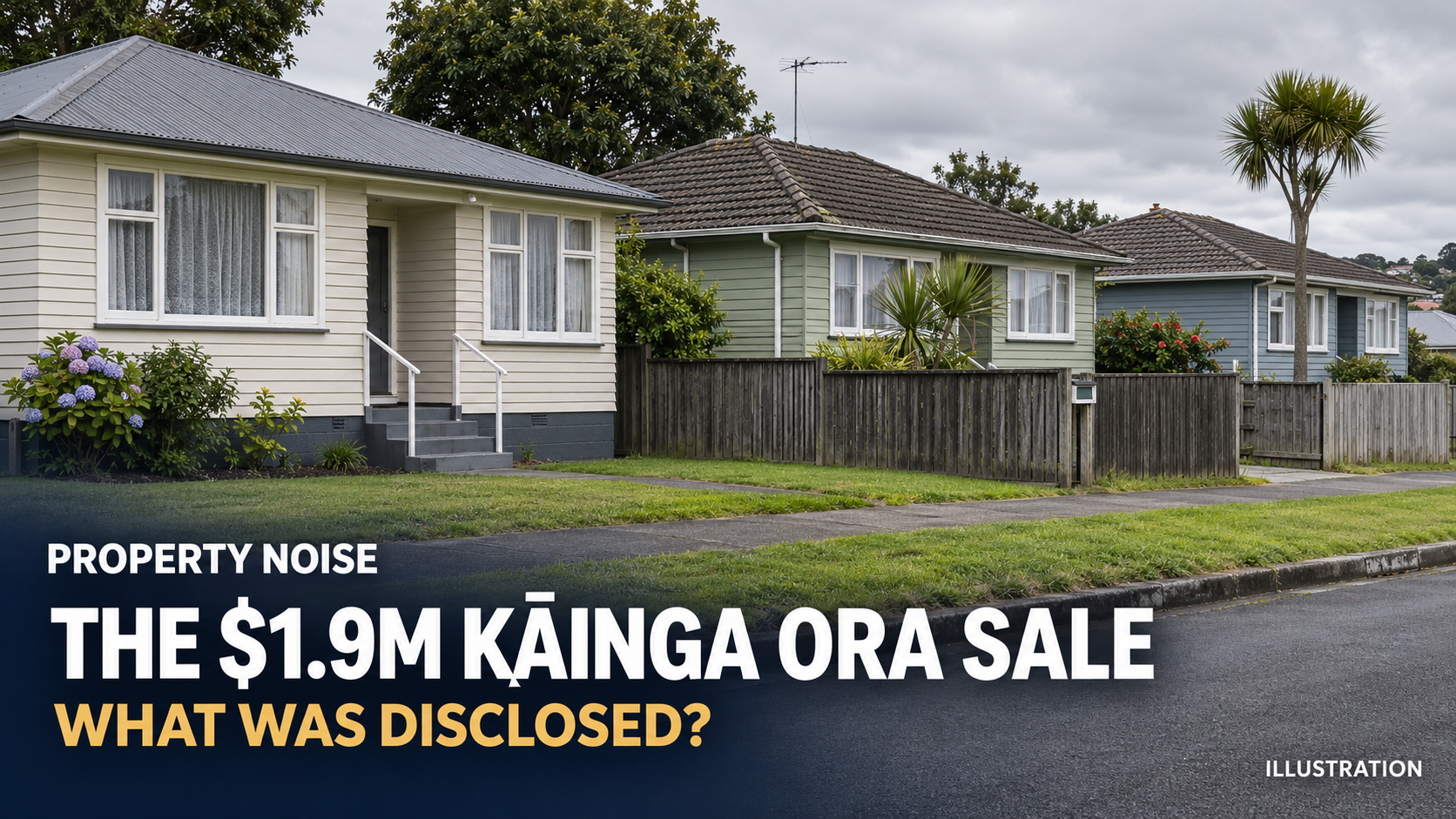
Former Harcourts salesperson Eshpreet Kohli voluntarily suspended his real estate licence while the Real Estate Authority examines a $1.9 million purchase of three Papatoetoe homes by his company. His then-colleague had listed the properties for Kāinga Ora. The housing agency says it wasn’t told before settlement that the buyer was connected to the selling agency. daily8.com
The three properties at 8A–8C Reseda Place changed hands in January 2026. Ben Leahy of the New Zealand Herald reported that the buyer, Nile Ventures No.1 Ltd, was a company of which Kohli was the sole director and shareholder. At the time, Kohli worked out of Harcourts’ Manukau office. His colleague and office owner, Iresh Tennakoon, listed the properties. daily8.com
With Kāinga Ora selling hundreds of properties through its national renewals programme, the Papatoetoe deal raises a question that goes beyond one office. How does a public seller make sure it knows who is on the other side of the deal before signing off? daily8.com
From a January sale to a November update
| When | What happened |
|---|---|
| January 2026 | Nile Ventures No.1 Ltd bought the three Reseda Place properties for a reported $1.9 million. |
| May 2026 | Kāinga Ora told the Herald it hadn’t been told before settlement about the buyer’s connection to the selling agency. Tennakoon referred the matter to the Real Estate Authority (REA). |
| August 2026 | Kohli voluntarily suspended his real estate licence, the REA told the Herald. |
| November 2026 | The REA said its process was ongoing. The Herald reported that Kohli was presenting himself as a property developer and that Nile Ventures was marketing new townhouses at the Reseda Place site. |
Timeline based on Ben Leahy’s 29 November reporting for the New Zealand Herald. daily8.com
What the rules say when someone connected to the agency wants to buy
The REA identifies buying a property listed with your own agency as a potential conflict of interest. Where sections 134 and 135 of the Real Estate Agents Act 2008 apply, the licensee must obtain the client’s consent on the prescribed Form 2 and provide an independent valuation at the licensee’s expense. The Act’s definition of a related person can include employees, salespeople engaged by a licensee and entities in which a licensee has an interest. Read the REA’s conflict-of-interest guidance. New Zealand Legislation
In this case, the paperwork could answer three questions. When did Kāinga Ora learn who controlled the purchasing company? What written consent, if any, was obtained? What valuation was available to the seller when it considered the offer? The reported purchase price alone can’t answer any of them. daily8.com
What Harcourts, Kāinga Ora and the watchdog said
The REA told the Herald that the matter was still going through its process and declined to comment further. Harcourts NZ managing director Bryan Thomson and Tennakoon also deferred to the regulator. Kāinga Ora said it expects agencies acting for it to meet their professional and legal obligations, including disclosure and conflict management. Kohli did not respond to the Herald’s questions. The paper also reported that it received no answer when it asked whether Kāinga Ora had paid commission on the sale. daily8.com
The licence suspension was voluntary. The REA offers voluntary suspension to licensees, who cannot carry out real estate agency work while suspended. As of the November report, the regulator had announced no outcome in the Reseda Place matter. daily8.com
The bigger test for Kāinga Ora’s state house sales
Kāinga Ora says it plans to sell about 900 homes a year nationwide for the next few years, with proceeds reinvested in housing that better meets tenants’ needs. It says properties are offered on the open market and that independent market valuations inform price expectations. It also publishes lists of properties for sale and properties already sold. See Kāinga Ora’s published property sales data. Homes and Communities
A sales list can show what changed hands and for how much. An audit trail can show how the seller got there. For the Reseda Place deal, the dates of any disclosure, valuation and consent matter because they would show what Kāinga Ora knew while it could still weigh the offer. As more state houses go to market, those are reasonable records for the public to expect Kāinga Ora to be able to produce.