
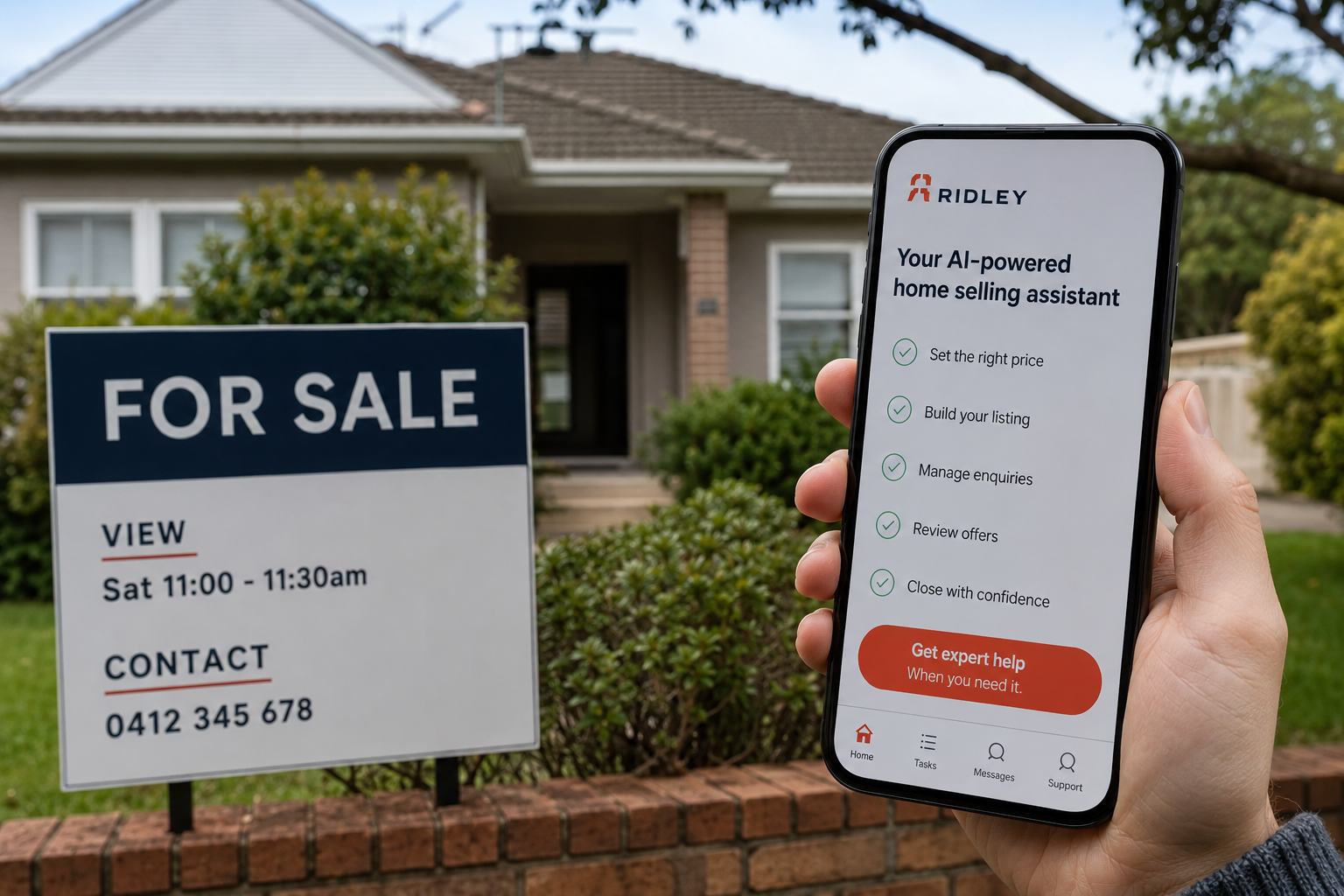
PHOTO: US technology entrepreneur Mike Chambers reportedly started questioning the traditional model while selling his own home in Boulder, Colorado.
For decades, selling a house has followed roughly the same formula: choose an agent, sign an agency agreement, list the property and pay thousands — sometimes tens of thousands — when it sells.
Artificial intelligence could be about to ask an uncomfortable question of the real estate industry:
How much of that work actually needs to be done by an agent anymore?
A US property technology company is experimenting with a radically different model — using AI to handle much of the work involved in selling a home, while bringing human professionals in only when their expertise is genuinely required.
It might be happening in America today, but the concept has obvious implications for New Zealand and Australia, where real estate commissions remain a substantial cost of moving home.
And this could be just the beginning.
NEW | Access New Zealand’s Ultimate Real Estate Agent Database — 18,000+ Agents & Agencies Included
The $20,000 question facing real estate agents
Think about what happens when somebody decides to sell their house.
An agent may help:
- assess the property
- recommend a price
- prepare marketing
- write advertising copy
- organise photography
- communicate with buyers
- schedule open homes
- answer enquiries
- provide vendor reports
- collect feedback
- manage offers
- negotiate
- coordinate paperwork
- keep the transaction moving
Historically, bundling those services together made sense.
Technology is now capable of doing an increasing proportion of them.
AI can already produce property descriptions in seconds.
It can analyse comparable sales.
It can respond to basic buyer enquiries.
It can qualify leads.
It can schedule appointments.
It can prepare marketing material.
It can summarise buyer feedback.
It can organise documents and provide sellers with step-by-step guidance.
So why should every seller automatically purchase the entire traditional agency package?
That’s the disruption beginning to emerge.
One homeowner decided to test the system
US technology entrepreneur Mike Chambers reportedly started questioning the traditional model while selling his own home in Boulder, Colorado.
Rather than automatically appointing an agent, he attempted to sell the property himself and documented the process online.
The response convinced him there was a much bigger opportunity.
His experience eventually led to Ridley, an American property technology platform designed to use AI to guide homeowners through the selling process.
But there’s an important distinction.
The idea isn’t necessarily to eliminate real estate agents.
It’s to unbundle them.
Instead of having a professional manage virtually every part of the transaction, technology handles routine processes while human expertise is brought in for areas such as strategy, difficult negotiations and closing the transaction.
That’s potentially a much bigger threat to the traditional agency model than another low-commission real estate company.
Imagine this model in New Zealand
Take a hypothetical Auckland homeowner selling a $1 million property.
Under a conventional agency model, the total selling cost can quickly become significant once commission, marketing and associated expenses are included.
Now imagine an AI-powered platform saying:
We’ll help you prepare and launch the property, organise enquiries, communicate with buyers, manage information and guide you through the process.
Need professional photography?
Purchase it.
Need an auctioneer?
Purchase it.
Want an agent to negotiate the final deal?
Pay for that service.
Need a lawyer?
Engage one.
Want somebody to manage the entire process?
You can still choose a traditional agent.
Suddenly the seller isn’t buying a bundled real estate service.
They’re buying individual pieces of expertise.
That’s a very different proposition.
Australia could be even more interesting
The same question applies across the Tasman.
In markets such as Sydney, Melbourne, Brisbane, Perth and Adelaide, even a relatively modest percentage-based selling fee can translate into a substantial dollar amount because of property values.
AI doesn’t need to replace the entire agent role to disrupt that economics.
It only needs consumers to start asking:
“What exactly am I paying for?”
That’s when things get uncomfortable.
If technology performs 30% of the administrative workload, should fees change?
What about 50%?
What happens at 70%?
At what point does a percentage of the property’s entire value become difficult to justify?
AI could turn agents into property advisers
There is another possible outcome — and it’s considerably less apocalyptic for agents.
AI may actually make the best real estate agents more valuable.
Administration isn’t necessarily why a homeowner chooses a great agent.
They want judgement.
They want someone who knows whether the buyer sitting across the table has another $30,000 available.
They want someone who understands the local market.
They want advice when an offer has unusual conditions.
They want someone capable of creating competition between buyers.
They want reassurance when a $1 million transaction starts going sideways.
Those skills are much harder to automate.
The agent of the future could therefore spend less time writing advertisements, compiling reports and sending routine emails — and considerably more time advising, negotiating and closing.
In other words, AI might not kill the real estate agent.
It could kill the transaction coordinator disguised as one.
The commission model may be more vulnerable than the agent
This distinction matters.
For years, predictions about technology replacing agents have largely failed to materialise.
Property portals didn’t eliminate them.
Online valuations didn’t eliminate them.
Virtual tours didn’t eliminate them.
Automated marketing didn’t eliminate them.
AI may not either.
But AI doesn’t need to eliminate agents to fundamentally change real estate.
It could instead attack the way their services are priced.
Consumers have become accustomed to unbundled services everywhere else.
We stream individual entertainment services.
We book accommodation directly.
We compare insurance online.
We arrange finance digitally.
We buy shares without ringing a stockbroker.
Real estate remains one of the few major consumer transactions where a large collection of services is routinely bundled together and paid for through a fee connected to the value of the asset being sold.
That makes it an obvious target for disruption.
There’s one huge problem: selling property isn’t ordering an Uber
Anyone predicting the imminent death of the real estate agent should probably calm down.
Selling property is complicated.
New Zealand and Australian property markets have different legal, regulatory and disclosure requirements.
Contracts matter.
Agency law matters.
AML requirements matter.
Buyer representations matter.
Negotiations matter.
And people’s homes aren’t ordinary products.
They can represent decades of savings and hundreds of thousands — or millions — of dollars.
A hallucinating chatbot giving incorrect advice during a major property transaction isn’t merely inconvenient.
It could be extraordinarily expensive.
Human accountability will therefore remain important.
The more likely future is AI + human expertise, rather than AI alone.
But sellers may soon demand proof of value
This is where the real challenge for agents begins.
For years, an agent could explain their commission by pointing to everything involved in selling a property.
AI is steadily shrinking that list.
That means agents may increasingly have to demonstrate that their value comes from something technology cannot easily replicate.
Local knowledge.
Relationships.
Strategy.
Trust.
Negotiating ability.
Buyer management.
Creating competitive tension.
And ultimately achieving a better result.
The great agents will probably have little difficulty making that case.
Others might.
Property Noise Take: The agent isn’t dead — but the old model might be
The most interesting part of the AI revolution in property isn’t whether ChatGPT can write a listing advertisement.
It obviously can.
That’s the easy stuff.
The real disruption begins when somebody combines AI, property data, automated communication, digital contracts, scheduling, marketing and professional services into one simple consumer platform.
At that point homeowners could be offered two very different choices:
Option A: Hand the entire sale to an agent and pay the traditional fee.
Option B: Let technology handle much of the process and pay humans only when specialist expertise is required.
If Option B becomes easy, trusted and substantially cheaper, New Zealand and Australian homeowners may start asking some very awkward questions.
And perhaps the biggest isn’t:
“Will AI replace real estate agents?”
It’s this:
“If AI does half the work, why am I still paying the full commission?”
That may be the question the real estate industry needs to start preparing to answer.
SOURCE: INC.COM