
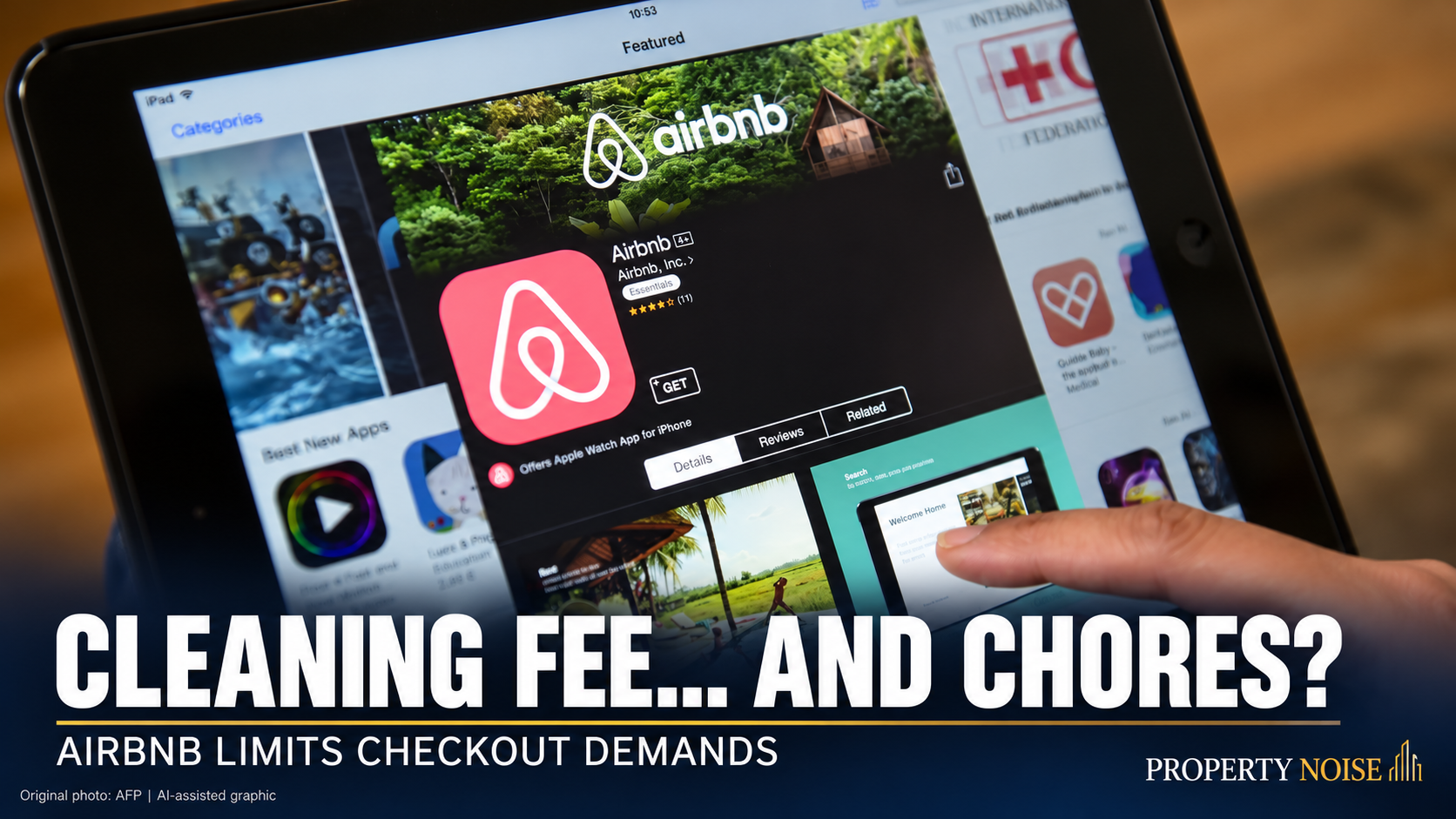
Pay a cleaning fee, strip the beds, wash the dishes and spend your final morning tidying someone else’s property. For Airbnb guests frustrated by checkout chore lists, a policy change is on the way.
Airbnb is tightening what hosts can ask guests to do, drawing a clearer line between reasonable requests and work that should be handled by a cleaner.
The new house rules policy takes effect on November 20, 2026. It follows changes announced on October 20 to how hosts set rules and how guests see them before booking.
For property owners, it raises a practical question about the service they are offering. For guests, it addresses a familiar frustration: paying for cleaning and then being handed a cleaning assignment.
What Airbnb hosts can ask guests to do
Airbnb’s published examples distinguish light tasks from more substantial cleaning.
| Task | Airbnb’s stated approach |
|---|---|
| Wash and put away dishes | Guests should not be asked |
| Put used dishes in the sink | Can be requested |
| Strip beds or start laundry | Guests should not be asked |
| Gather used towels | Can be requested |
| Take rubbish off-site | Guests should not be asked |
| Separate rubbish into designated indoor bins | Can be requested |
| Avoid using an advertised amenity | Should not be required |
| Turn air conditioning off when leaving | Can be requested |
Airbnb says it considers the type of accommodation, length of stay and local circumstances when assessing requests, with exceptions possible. The platform will flag problematic requests for hosts to review.
The cleaning fee is where expectations collide
The strongest reaction is likely to come from travellers who believe a cleaning charge should remove the need for a lengthy checkout routine.
In Susan Edmunds’ RNZ report, Consumer NZ spokesperson Jessica Walker acknowledges both sides.
Guests should leave accommodation in a reasonable state, she says. But it is understandable that people become frustrated when a separate cleaning fee is followed by a list of jobs.
That distinction matters.
Treating a property respectfully and completing a cleaner’s work are different expectations. The difficulty has been deciding where one ends and the other begins.
The revised policy gives clearer examples, although disagreements about what constitutes a reasonable condition at checkout are unlikely to disappear.
Paying for a holiday should not mean guessing the workload
A guest may accept a cleaning fee when comparing accommodation options. Discovering additional chores later can change their view of what they bought.
Massey University marketing expert Bodo Lang told RNZ that satisfaction depends heavily on expectations.
Someone paying a cleaning charge may reasonably expect the convenience of leaving without removing bed linen or completing other substantial tasks.
The issue is therefore broader than a few minutes at the sink. It concerns whether the experience matches the price and promise presented when the booking was made.
For hosts, clarity can help protect the relationship before guests arrive.
Guests still need to respect the property
The policy change does not turn a booking into permission to leave a home in an unreasonable condition.
Lang also warns that some guests may interpret the limits too broadly. Most hosts and travellers will have a shared understanding of acceptable behaviour, but outliers can create problems.
A property left excessively dirty presents a different issue from an ordinary changeover between bookings.
The challenge for accommodation operators is maintaining that distinction without recreating an extensive chore list under a different name.
According to RNZ’s report, the updated policy also prohibits host-imposed fines and limits the circumstances in which hosts can require separate contracts. Those platform restrictions should not be confused with a blanket removal of guest responsibility for damage.
Is Airbnb becoming more like a hotel?
The debate exposes a tension in Airbnb’s identity.
A stay can take place in someone’s personal home, yet guests may compare the price, presentation and service with commercial accommodation.
Lang argues that Airbnb has moved further towards a commercial model, with travellers increasingly bringing hotel-style expectations to their bookings.
That creates a difficult balance.
Hosts may see guests as visitors who should help care for a residence. Guests may see themselves as paying customers who have already covered the cost of preparing it for the next arrival.
Neither perspective automatically resolves the cleaning question. But when a property is marketed as a polished accommodation experience, the service expectations become harder to separate from that positioning.
What the change means for short-term rental owners
For owners and managers, the practical task is reviewing the guest experience as well as the written rules.
That includes asking whether:
- Cleaning arrangements cover the work needed between bookings.
- The total price matches the service being offered.
- Checkout expectations are brief and easy to understand.
- Guests can identify the requirements before committing.
The change does not establish that cleaning fees will fall. Nor does it prove hosts will raise nightly prices.
Those outcomes depend on individual operating costs and pricing decisions. What it does establish is a need for hosts to reassess which tasks they expect paying guests to complete.
For more coverage of rental businesses, property ownership and the wider market, explore Property Noise’s New Zealand property news and Australian property news.
Property Noise’s take: the checkout is part of the product
The final morning can shape how a guest remembers an entire stay.
A comfortable home and a good location may lose some of their appeal if departure involves an unexpected list of cleaning jobs.
Airbnb’s change puts a clearer boundary around that experience. Guests still need to behave responsibly, while hosts need to build ordinary turnover work into how they operate.
For a business selling convenience, the checkout should support that promise.
If cleaning is part of the bill, guests deserve to understand exactly what they are still expected to do.
Source attribution: Based on Susan Edmunds’ RNZ reporting dated October 21, 2026, and Airbnb’s October 20 announcement. The new house rules policy takes effect November 20, 2026. Commentary by Property Noise.