









PHOTO: That isn’t social media speculation.
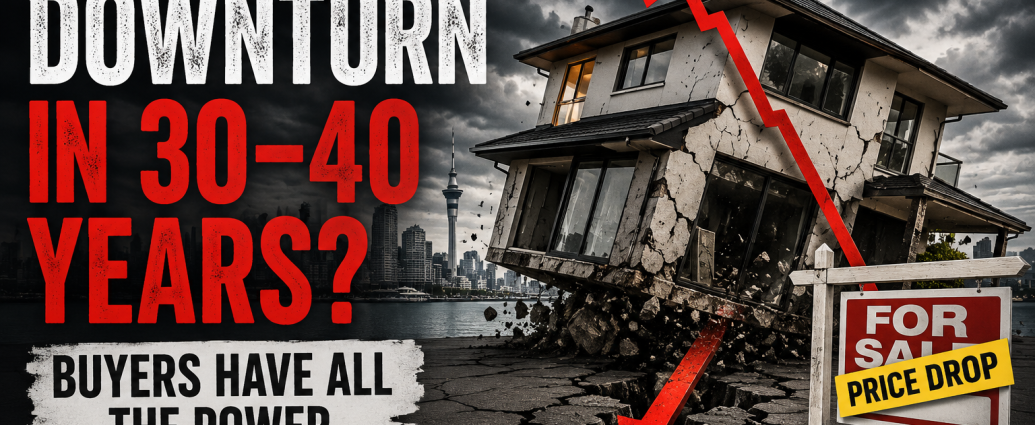
New Zealand’s housing market has now officially entered what many analysts are calling the longest and deepest property downturn in at least 30 to 40 years.
That isn’t social media speculation.
That isn’t clickbait.
That’s the assessment of Cotality (formerly CoreLogic), one of New Zealand’s leading property data companies.
National property values have now fallen again, extending a housing correction that simply refuses to end.
And perhaps the biggest question now isn’t how much prices have fallen.
The Numbers Don’t Lie
According to Cotality’s latest figures:
- National property values fell another 0.3% in July
- Prices have dropped 1% over the past three months
- Values remain below where they were a year ago
- Auckland fell 0.6%
- Wellington dropped 0.5%
- Tauranga declined 0.7%
Even Christchurch—one of the country’s stronger markets—managed only a modest 0.2% increase.
These are hardly the signs of a booming market.
The Market Has Changed
Perhaps the biggest shift isn’t pricing.
It’s power.
For years sellers controlled the market.
Today?
Buyers hold nearly all the negotiating power.
There are more listings.
More choice.
Longer selling times.
Greater discounts.
Many buyers know they can simply wait because another property is likely to appear tomorrow.
Investors Are Hitting Pause
One of the most significant changes is occurring among property investors.
Historically they have helped underpin the market during softer periods.
This time many are choosing to wait.
Why?
Because uncertainty is everywhere.
Potential tax changes.
Election policy.
Interest deductibility.
Possible capital gains tax changes.
Higher insurance premiums.
Increasing council rates.
And mortgage costs that remain well above where they were just a few years ago.
Cashflow—not capital gains—is becoming the biggest concern.
First Home Buyers Are Winning
Ironically, the biggest winners in today’s market may be first-home buyers.
More listings.
Less competition.
Greater ability to negotiate.
For many younger buyers, this is the most favourable market they’ve experienced in years.
That doesn’t necessarily make homes “cheap.”
But it does mean buyers finally have options.
The Elephant in the Room
One uncomfortable truth remains.
Despite years of headlines predicting recoveries…
Forecasting booming markets…
Suggesting prices had “bottomed”…
The recovery simply hasn’t happened.
Every few months another optimistic forecast appears.
Then another month passes.
And prices remain flat—or fall again.
At some point, optimism needs to give way to reality.
Confidence Can’t Be Manufactured
The property market ultimately runs on confidence.
Right now confidence is fragile.
Businesses remain cautious.
Consumers remain cautious.
Borrowers remain cautious.
Investors remain cautious.
Banks have tightened lending.
Mortgage rates have stopped falling and may rise again.
That’s hardly the recipe for a strong housing rebound.
Not All Doom and Gloom
It’s important to keep perspective.
This is not the Global Financial Crisis.
Forced mortgagee sales remain relatively low.
Employment remains comparatively resilient.
Most homeowners are continuing to meet repayments.
Many vendors simply aren’t prepared to sell at heavily discounted prices.
That has prevented the dramatic price collapses seen overseas.
Regional New Zealand Tells A Different Story
Not every market is struggling.
Areas supported by strong farming and tourism sectors continue to outperform.
Invercargill, Gore, Mackenzie and Hurunui have all shown resilience, reminding us that property is—and always will be—a local market.
Property Noise View
Perhaps the biggest lesson from this downturn is that the property market doesn’t always move in straight lines.
For years the industry became accustomed to almost uninterrupted price growth.
Many assumed that was normal.
History tells us it wasn’t.
Healthy property markets require balance—not perpetual price inflation.
For buyers, today’s market presents opportunities that simply didn’t exist three years ago.
For sellers, pricing realistically has never been more important.
And for the property industry itself, credibility matters.
Consumers deserve honest commentary based on evidence—not perpetual optimism designed to stimulate transactions.
Because eventually the data always wins.
The market will recover—it always does.
But pretending that recovery has already arrived doesn’t help buyers, sellers or the long-term health of New Zealand’s property market.
SOURCE: RNZ