PHOTO: The key question is not whether rates will rise—but whether they will rise enough to justify locking in today’s higher two-year rates.
Should You Fix Your Mortgage for One Year or Two?
With mortgage rates climbing again and the Reserve Bank expected to lift the Official Cash Rate (OCR), many Kiwi homeowners are facing one of the biggest financial decisions of the year—how long should they fix their home loan?
While fixing for two years provides greater certainty, some economists believe borrowers could actually be better off choosing a one-year fixed rate in the current market.
One-Year Rates Continue to Offer Better Value
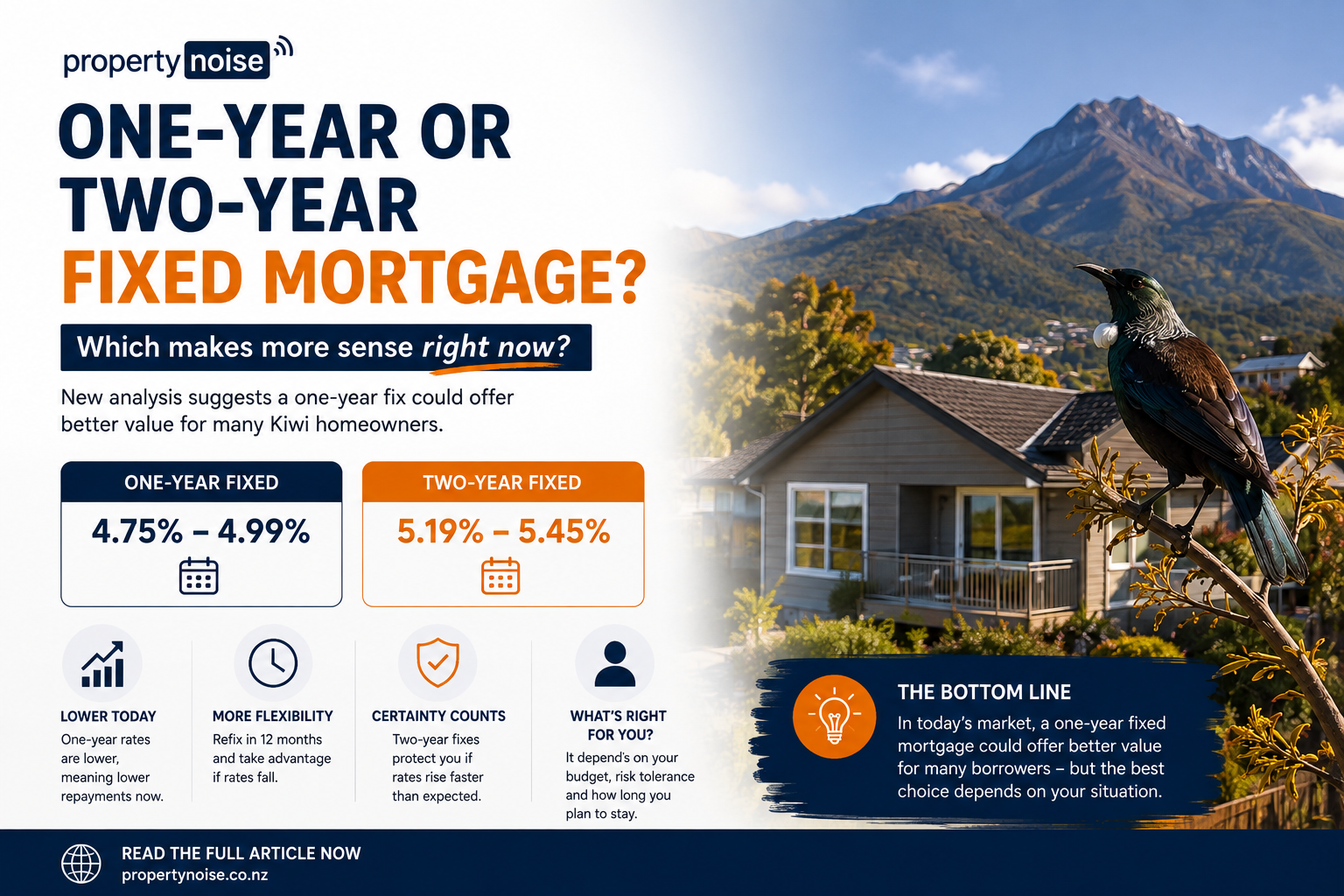
At present, most major New Zealand banks are offering:
- One-year fixed rates: approximately 4.75% – 4.99%
- Two-year fixed rates: approximately 5.19% – 5.45%
That difference may not sound significant, but over a large mortgage it can translate into thousands of dollars in additional interest.
The reason longer-term rates are higher is that financial markets have already priced in further increases to the OCR over the coming months.
Markets Already Expect More Rate Hikes
Although inflation pressures have eased slightly thanks to lower global oil prices, economists still expect the Reserve Bank to continue increasing the OCR as it works to return monetary policy to more neutral settings.
The key question is not whether rates will rise—but whether they will rise enough to justify locking in today’s higher two-year rates.
Many economists believe they won’t.
The Numbers Favour One Year
One scenario suggests that one-year mortgage rates would need to climb to around 5.8% in twelve months’ time before two consecutive one-year fixes would become more expensive than locking in a typical two-year rate today.
That’s a sizeable increase from current one-year mortgage rates.
Unless interest rates rise much more sharply than markets currently expect, borrowers fixing for one year may end up paying less over the next two years.
Certainty Still Has Value
Of course, not every borrower has the same appetite for risk.
Choosing a two-year fixed rate means:
- Greater certainty over repayments
- Protection if interest rates rise faster than expected
- Easier household budgeting
For many families, paying a slightly higher rate today may be worthwhile if it provides financial certainty.
Others may prefer a split strategy by dividing their mortgage across different fixed terms, reducing the risk of having the entire loan refix at once.
What Should Borrowers Do?
There is no one-size-fits-all answer.
Before deciding, homeowners should consider:
- How long they expect to remain in the property
- Their household budget
- Their tolerance for future interest rate movements
- Whether they could comfortably absorb higher repayments in twelve months’ time
Shopping around between lenders and negotiating below advertised rates can also make a significant difference over the life of a mortgage.
Property Market Remains Flat
While interest rates continue to dominate headlines, New Zealand’s housing market remains relatively subdued.
Many analysts describe current house price growth as largely flat, with buyers continuing to benefit from improved housing supply and less competition than during previous market peaks.
For borrowers coming off historically low fixed rates, however, refinancing remains one of the biggest financial challenges facing households in 2026.
The Bottom Line
For many borrowers, a one-year fixed mortgage currently appears to offer better value than locking in for two years.
However, the best choice depends on your personal circumstances, financial goals and willingness to accept future interest rate risk.
If you’re approaching the end of your fixed term, now is a good time to compare offers from multiple banks, negotiate with your lender and seek independent mortgage advice before making a decision.