PHOTO:
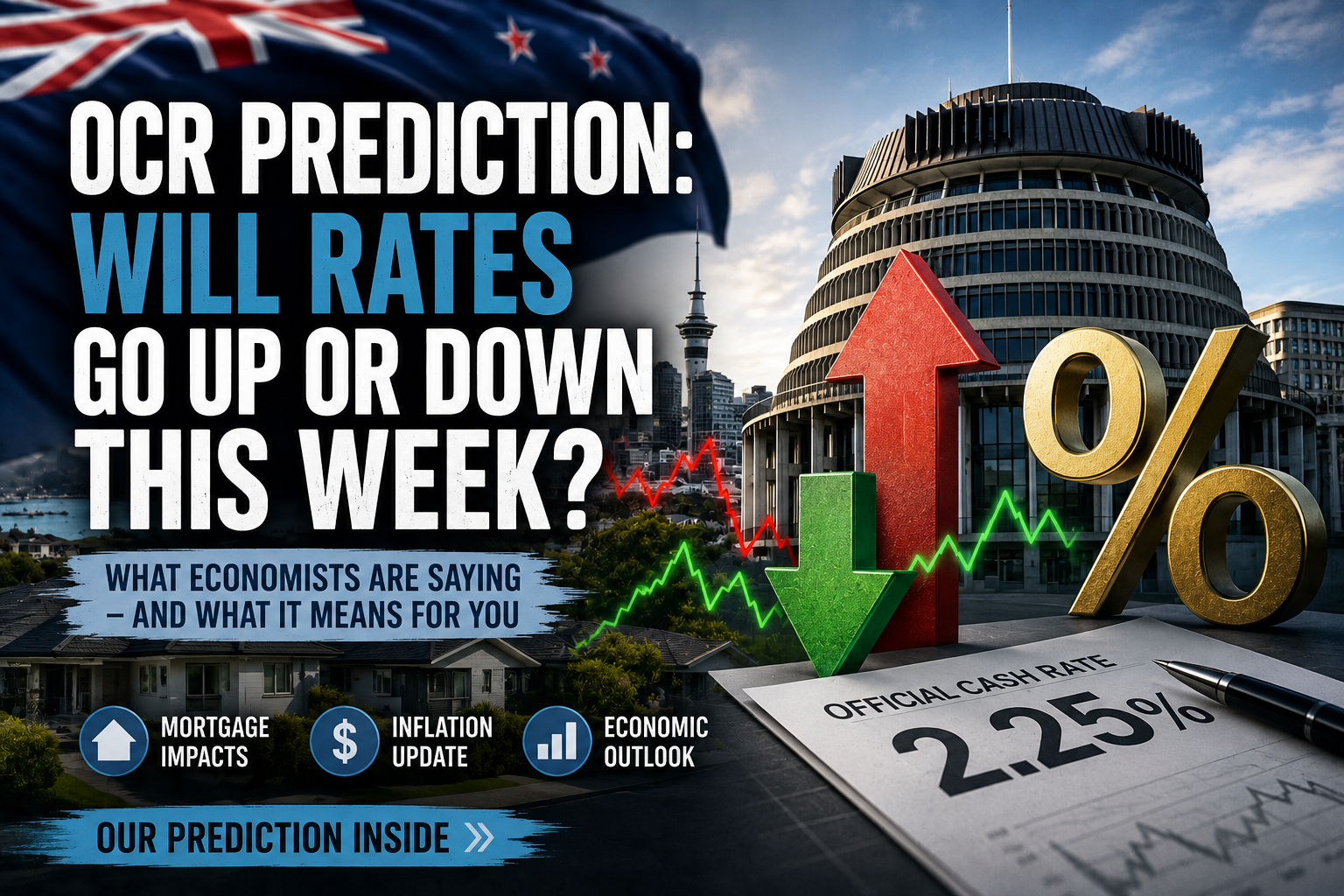
All eyes are on the Reserve Bank of New Zealand (RBNZ) as it prepares to announce its latest Official Cash Rate (OCR) decision on Wednesday, 8 July.
For homeowners, first-home buyers, investors and businesses, this week’s announcement could be one of the most important economic events of 2026.
After months of holding the OCR at 2.25%, speculation is mounting that the Reserve Bank may finally begin lifting interest rates again as inflationary pressures remain stubbornly high.
So what will happen?
Our Prediction: A Hold… But It Could Be Close
If we had to make one prediction today, we believe the Reserve Bank is most likely to leave the OCR unchanged at 2.25% this week.
However, this is far from a certainty.
The Reserve Bank has become increasingly hawkish in recent months, repeatedly warning that inflation risks remain elevated and that higher interest rates may be required sooner than previously expected.
That means even if rates remain unchanged this week, the accompanying statement could be far more important than the OCR itself.
Markets will be watching every word.
Why the OCR Could Stay on Hold
There are several reasons the Monetary Policy Committee may decide to wait.
1. The Economy Remains Fragile
While economic activity has improved from last year’s slowdown, many households continue feeling financial pressure.
Consumer spending remains cautious.
Business confidence is improving, but recovery is still uneven.
The Reserve Bank may prefer to allow previous policy settings more time to work before tightening further.
2. Mortgage Holders Are Still Under Pressure
Thousands of New Zealand homeowners are still adjusting to higher mortgage repayments.
Although fixed mortgage rates have eased from their peaks, many borrowers continue refinancing onto higher rates than they enjoyed during the pandemic years.
Another immediate OCR increase would place additional pressure on household budgets.
3. Inflation Expectations Need Monitoring
While headline inflation has been affected by higher fuel prices and global events, the Reserve Bank remains focused on medium-term inflation.
Officials will want to ensure recent price increases don’t become embedded across wages and businesses before acting aggressively.
Why an OCR Increase Is Still Possible
Despite our prediction of a hold, there are compelling arguments for a rate rise.
Inflation Remains Above Target
Annual inflation is still sitting above the Reserve Bank’s 2% midpoint target.
Recent geopolitical tensions and higher energy prices have lifted inflation expectations, increasing pressure on policymakers to act.
The Reserve Bank Has Been Sending Strong Signals
Perhaps the strongest argument for a July increase comes from the Reserve Bank itself.
Following its May meeting, Governor Anna Breman indicated that interest rates would likely need to rise sooner than previously expected.
That language was considerably more hawkish than markets had anticipated.
Economists Are Divided
While many economists expect the OCR to remain unchanged this week, others believe the first increase in the new tightening cycle could arrive immediately.
Several banks have shifted their forecasts toward earlier OCR increases following the Reserve Bank’s latest guidance.
What Would a Rate Rise Mean?
If the Reserve Bank raises the OCR by 0.25 percentage points, several impacts could follow:
- Mortgage rates may begin edging higher.
- Floating-rate borrowers would likely feel the effect first.
- Some fixed mortgage rates may also move higher.
- Term deposit rates could improve.
- Borrowing costs for businesses would increase.
- House price growth may slow in some regions.
For property buyers, another rate increase could reinforce the current buyer-friendly market by limiting rapid price growth.
What Happens if the OCR Is Left Unchanged?
A hold should provide short-term certainty for homeowners and businesses.
However, it doesn’t necessarily mean interest rates have peaked.
In fact, many economists believe any decision to leave the OCR unchanged this week would simply delay the first increase until September or later this year.
What Property Owners Should Watch
Beyond the OCR announcement itself, attention will quickly turn to the Reserve Bank’s commentary.
Markets will be looking for clues about:
- Future OCR increases
- Inflation forecasts
- Economic growth expectations
- Employment trends
- Housing market conditions
- Global risks
Often, these forward-looking signals have a greater impact on mortgage markets than the OCR decision itself.
Final Prediction
Property Noise NZ Prediction
Probability of an OCR Hold: 65%
Probability of a 0.25% OCR Increase: 35%
Even if the OCR remains unchanged at 2.25%, we expect the Reserve Bank to retain a firm anti-inflation stance and keep the door open for further increases later in 2026.
For homeowners and borrowers, this week’s announcement could set the tone for mortgage rates over the remainder of the year.
Whether you’re buying your first home, refinancing, investing or simply watching the market, Wednesday’s OCR decision is likely to be one of the defining moments for New Zealand’s economy in 2026.