
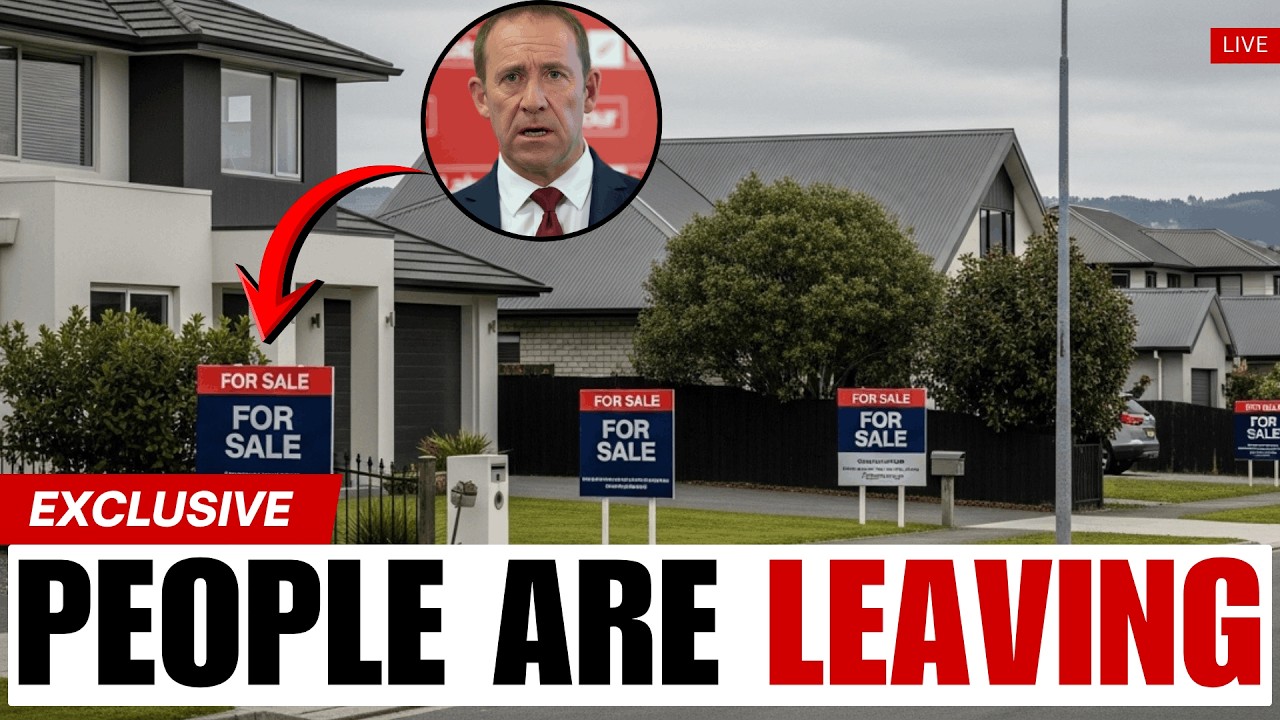
PHOTO: YOUTUBE
Wellington Homeowners Trapped in Negative Equity as Economists Say Housing Boom Was Built on Sand
Wellington’s once red-hot property market has become one of New Zealand’s most challenging housing markets, with some homeowners now facing losses exceeding $140,000.
Economists and housing commentators have warned for several years that the capital’s extraordinary price growth during the COVID-era boom was unsustainable. Now, many of those warnings appear to be playing out.
House prices in Wellington have fallen by more than 25% from their 2021 peak, leaving recent purchasers grappling with negative equity and uncertain prospects for recovery.
For some first-home buyers who entered the market using government-backed low-deposit lending schemes, the correction has been particularly painful.
📉 What Is Negative Equity?
Negative equity occurs when the amount owed on a mortgage exceeds the current value of the property.
For example:
- Purchase price in 2021: $850,000
- Deposit (5%): $42,500
- Mortgage: $807,500
If the property’s value subsequently falls to $700,000, the homeowner may owe more to the bank than the home is worth.
This creates challenges for families needing to relocate, refinance, or sell.
🏛️ Public Sector Cuts Hit Wellington Hard
Unlike many other parts of New Zealand, Wellington’s economy is heavily dependent on the public sector.
Recent Government restructuring and job reductions have weighed heavily on confidence throughout the region.
Potential buyers have become more cautious, while existing homeowners have delayed upgrading or purchasing investment properties.
Combined with higher mortgage repayments and increased living costs, demand has weakened considerably.
💰 Interest Rates Changed the Equation
The housing boom between 2020 and 2021 was fuelled by historically low interest rates.
At one stage, borrowers could secure mortgage rates below 3%.
However, the Reserve Bank’s aggressive tightening cycle saw the Official Cash Rate climb from 0.25% to 5.50%, significantly increasing mortgage servicing costs.
Many households who purchased near the market peak suddenly found themselves paying hundreds, and in some cases thousands, of dollars more each month.
🏡 Government Policies Under Scrutiny
Critics argue that several housing policies may have unintentionally encouraged buyers to stretch themselves financially during the boom years.
Changes over recent years include:
✔ Removal of the First Home Grant
✔ Retention of low-deposit lending initiatives
✔ Restoration of interest deductibility for investors
✔ Reduction of the bright-line test period
Some economists believe these measures support market activity, while others argue they risk inflating prices beyond sustainable levels.
🔮 Is Wellington Near the Bottom?
Despite the gloomy headlines, analysts suggest there are some reasons for cautious optimism.
Mortgage rates have started to decline.
First-home buyers remain active.
Population growth and constrained housing supply may eventually provide support for prices.
However, many commentators believe a full recovery could still take several years.
For homeowners caught in negative equity, patience may prove to be the most valuable asset.
📌 Key Takeaways
✅ Wellington house prices have fallen more than 25% from their peak.
✅ Some homeowners are estimated to be in negative equity by as much as $140,000.
✅ Public sector job cuts have weakened buyer confidence.
✅ Higher interest rates remain a significant challenge for mortgage holders.
✅ Economists say Wellington’s correction highlights the risks of buying during periods of extreme market exuberance.