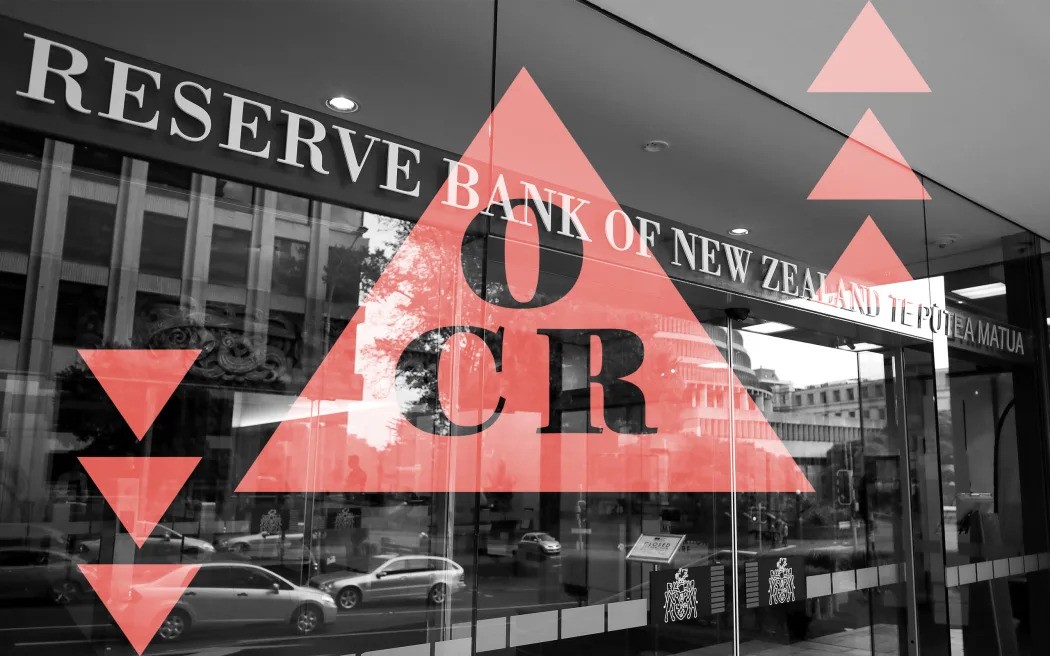
PHOTO: The Reserve Bank of New Zealand increased the Official Cash Rate by 25 basis points, from 2.50% to 2.75%.
The OCR has been hiked to 2.75%. Inflation is at 4.1%, another increase may still be coming, and a housing market drowning in listings has just been handed exactly what it didn’t need: more expensive money.
Just when New Zealand’s battered property market was looking for oxygen, the Reserve Bank has reached for the brake pedal.
Again.
Today, 2 September 2026, the Reserve Bank of New Zealand increased the Official Cash Rate by 25 basis points, from 2.50% to 2.75%.
It is the second consecutive OCR increase, following July’s hike from 2.25% to 2.50%, and the RBNZ has explicitly warned that it may need to increase the OCR further this year.
For homeowners, investors, developers, first-home buyers and real estate agents, those words matter.
Because the property market the RBNZ is tightening into isn’t booming.
It isn’t overheating.
It isn’t even particularly healthy.
House prices are flat. Listings are plentiful. Buyers have choice. Mortgagee listings are rising. And now borrowing costs face renewed upward pressure.
Welcome to what could become the housing market’s next headache.
Why Did the RBNZ Raise the OCR?
The answer starts with one ugly number:
4.1%.
That’s New Zealand’s annual inflation rate for the June 2026 quarter — well above the Reserve Bank’s 1%–3% target band.
The RBNZ says the Middle East conflict pushed petrol and diesel prices sharply higher. Those fuel costs then feed into everything from transportation and food to flights and business operating expenses.
The Bank expects inflation to remain above 3% for the remainder of 2026, before returning to its target range next year and eventually heading back toward 2%.
There’s an important wrinkle, however.
The RBNZ also says core inflation, expected wage growth and inflation expectations remain consistent with inflation returning to the target band by mid-2027.
So this isn’t simply a story of rampant domestic demand forcing prices through the roof.
A significant part of the inflation shock has come from fuel and international events.
Nevertheless, the RBNZ’s weapon is domestic interest rates.
And New Zealand mortgage holders are standing directly in the firing line.
Here’s the Brutal Irony: The Housing Market Is Already Weak
The timing couldn’t be more uncomfortable.
Latest realestate.co.nz figures show the national average asking price in August was $849,362.
Three years earlier it was $877,158.
That’s a decline of 3.2% over three years.
Meanwhile there are now 32,908 properties for sale nationally — around 45% more than three years ago.
In other words:
Prices aren’t booming.
Stock is booming.
Buyers already have enormous choice, vendors are competing aggressively for attention, and another spring wave of listings is approaching.
Now throw potentially higher mortgage rates into that equation.
That isn’t rocket fuel for housing.
It’s another bucket of cold water.
Higher OCR = Less House for the Same Buyer
The OCR doesn’t dictate the exact mortgage rate your bank charges tomorrow morning.
But it influences wholesale funding and retail interest rates throughout the economy, and the RBNZ itself says OCR changes typically affect mortgages, household lending, business loans and savings rates.
That’s where today’s decision can become painful for real estate.
Imagine a buyer who has been approved to borrow at one level of repayments.
Increase mortgage rates and one of three things eventually happens:
They borrow less.
They offer less.
Or they don’t buy at all.
Multiply that behaviour across thousands of potential purchasers and you don’t need house prices to “crash” to hurt the industry.
You simply need transactions to become harder.
And There Is a Lagged Bomb Sitting Under Existing Homeowners
This may be the most important part of today’s announcement.
New Zealand borrowers overwhelmingly use fixed mortgage terms, meaning an OCR increase doesn’t immediately hit every homeowner.
The pain arrives progressively as mortgages roll off existing fixed rates.
The Reserve Bank notes that monetary-policy changes can take months — and sometimes years — to fully work through the economy.
Sarah Wood, CEO of realestate.co.nz, highlighted the same problem following today’s announcement: households can still be absorbing earlier changes when another one enters the pipeline.
And there’s another uncomfortable statistic.
Realestate.co.nz says there were 423 mortgagee listings during the first eight months of 2026, compared with 316 during the same period in 2025.
That’s an increase of roughly 34%.
And today’s OCR increase hasn’t even had time to hit.
The Reserve Bank Knows Housing Is Weak
Perhaps the most extraordinary part of today’s announcement is that the RBNZ itself acknowledges the pressure.
Its Monetary Policy Statement says weak income growth, job insecurity and flat house prices are weighing on household spending and residential investment, particularly in Auckland and Wellington.
Read that again.
Flat house prices are already weighing on the economy.
Yet the inflation problem requires tighter monetary policy.
That’s the bind.
The Reserve Bank isn’t raising rates because it wants house prices to fall.
Its job is inflation.
But property doesn’t get an exemption simply because the market is struggling.
Real Estate Agents Should Be Paying Very Close Attention
For agents, today’s OCR decision could be more significant than another 25 basis points suggests.
The biggest threat isn’t necessarily a dramatic collapse in property values.
It’s transaction paralysis.
Buyers become cautious.
Pre-approvals shrink.
Investors recalculate yields.
Developers reassess projects.
Homeowners hesitate to trade up.
Vendors remain anchored to yesterday’s price expectations.
Listings accumulate.
Days on market stretch.
Deals fall over on finance.
And agents fight harder for fewer unconditional contracts.
That’s a nasty combination in a commission-only industry.
A house can technically be “worth” $850,000.
But if nobody is prepared — or able — to finance $850,000, the theoretical valuation doesn’t pay the vendor’s mortgage or the agent’s commission.
The only price that ultimately matters is the price a financed buyer can actually pay.
The RBNZ Is Fighting Inflation With a Weapon That Hits Property Hard
This is where today’s decision becomes controversial.
June inflation reached 4.1%, but fuel was a major driver.
RBNZ says the Middle East conflict pushed petrol and diesel prices higher, which flowed into other prices.
Raising the OCR can’t produce oil.
It can’t end a Middle East conflict.
It can’t make a tanker of fuel arrive in Auckland for less money.
What it can do is reduce domestic demand.
Make borrowing more expensive.
Encourage saving.
Reduce discretionary spending.
And ultimately take heat out of the economy so imported inflation doesn’t become embedded in wages, expectations and domestic prices.
From a central bank perspective, that’s the logic.
From the perspective of a heavily mortgaged homeowner?
It can feel like being asked to personally fight global inflation through your mortgage repayments.
And Don’t Assume 2.75% Is the End
This may be the sentence property owners should pay most attention to.
The Reserve Bank says:
“We may need to increase the OCR further this year.”
So today’s hike may not be the destination.
It’s potentially another step.
The July increase took the OCR from 2.25% to 2.50%.
Today’s takes it to 2.75%.
And another increase would take New Zealand into a distinctly different interest-rate environment from the one buyers were anticipating when rates were being cut.
That matters enormously for sentiment.
Property markets don’t run on mathematics alone.
They run on confidence.
And buyers who believe mortgage rates could be higher in six months behave very differently from buyers convinced rates are heading lower.
The Property Recovery Just Got Harder
For months the industry has been waiting.
Waiting for lower mortgage rates.
Waiting for buyers to return.
Waiting for confidence.
Waiting for the mythical property recovery to finally arrive.
Instead, the Reserve Bank has now delivered back-to-back rate hikes.
And the housing numbers underneath today’s decision are hardly screaming boom.
32,908 homes for sale.
45% more stock than three years ago.
National asking prices below August 2023.
Mortgagee listings up around 34% year-to-date.
And now:
OCR: 2.75%.
If borrowing costs rise from here, spring 2026 could become a fascinating — and potentially brutal — test of vendor expectations.
Property Noise Take: This Could Be Where Reality Finally Meets the Asking Price
Forget predictions of another enormous nationwide crash.
Something more mundane could be far more damaging to the real estate industry.
No urgency.
Buyers have choices.
They have negotiating power.
Finance isn’t getting cheaper.
And sellers entering spring will be competing against more than 32,000 other properties.
The Reserve Bank is doing what it believes is necessary to crush inflation before it becomes embedded.
But monetary policy doesn’t operate inside a laboratory.
It lands in lounge rooms.
It lands on mortgage statements.
It lands at open homes.
And eventually, it lands on vendors’ asking prices.
For New Zealand real estate, the question after today’s OCR hike isn’t:
“When will the boom return?”
It’s becoming:
“How much more can this market take?”
Official announcement: RBNZ September 2026 Monetary Policy Statement