
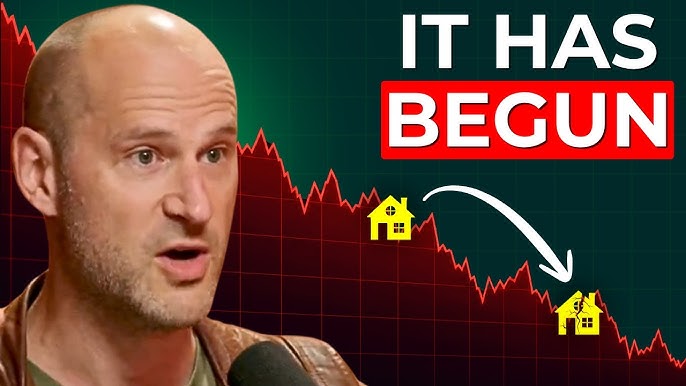
PHOTO: The Follio Property Podcast
🚨 Is Australia Heading for Its Biggest Property Correction in Four Decades?
For years, Australia’s housing market appeared unstoppable.
Property prices surged through low interest rates, strong population growth, investor demand and chronic housing shortages. Sydney became one of the most expensive housing markets on Earth, while Brisbane, Perth and Adelaide experienced extraordinary post-pandemic growth.
Now a growing number of economists, banks and property analysts are warning the tide may be turning.
Some forecasts suggest Australia could be facing its largest housing correction in 40 years, with Sydney and Melbourne expected to lead the decline.
However, the story is far more complicated than the headlines suggest.
📉 Why Are Experts Talking About a Property Crash?
Several factors are converging at the same time.
The first is affordability.
Australia’s housing market has become one of the least affordable in the developed world. Sydney remains among the world’s most expensive cities relative to household income, while nationally housing costs have significantly outpaced wage growth over the past two decades.
Many economists argue prices have simply risen faster than household incomes can sustainably support.
At the same time, Australian households have experienced a significant decline in real disposable income as inflation, higher interest rates and rising living costs squeeze family budgets.
Unlock 1.2 Million+ Aussie Business Contacts — No Subscriptions, No Limits
🏦 Tax Changes Could Trigger Investor Retreat
One of the biggest concerns centres on major housing tax reforms proposed by the Australian Government.
The changes include:
- Restrictions on negative gearing.
- Changes to capital gains tax concessions.
- New minimum tax treatments on certain structures.
- Reduced incentives for property investors.
Supporters argue these reforms will improve affordability for first-home buyers.
Critics argue they could significantly reduce investor demand and remove billions of dollars from residential property investment.
Morgan Stanley and other economists have suggested the reforms could contribute to housing price declines of between 5% and 10% nationally.
Unlock 1.2 Million+ Aussie Business Contacts — No Subscriptions, No Limits
🏙️ Sydney and Melbourne Face the Greatest Risk
If a correction occurs, Sydney and Melbourne appear most exposed.
Both cities have experienced substantial capital growth over many years and contain large numbers of highly leveraged borrowers and investors.
Bank of America recently warned Sydney and Melbourne could experience price falls of up to 8% as investor demand weakens and affordability pressures intensify.
Early signs are already emerging.
Several analysts report that home values in Sydney and Melbourne have begun softening while some smaller markets continue to grow.
🌏 Australia Is Becoming a Multi-Speed Market
Perhaps the most important point often missed in crash predictions is that Australia no longer operates as a single property market.
Instead, it has become a collection of very different markets.
While Sydney and Melbourne face headwinds, other cities continue to benefit from:
- Strong interstate migration.
- Housing shortages.
- Population growth.
- Relative affordability.
Brisbane, Perth and Adelaide have significantly outperformed Australia’s largest cities in recent years and continue to attract buyers seeking better value.
This means a national “crash” could look very different depending on where you live.
🏗️ The Housing Shortage Argument
Not everyone believes a major crash is likely.
Many property analysts point to Australia’s chronic housing shortage as a powerful support for prices.
Recent figures show housing construction continues to lag population growth, with migration and demand outpacing the number of new homes being built.
Some researchers argue that unless Australia dramatically increases housing supply, any price correction may prove temporary.
In simple terms:
Even if demand weakens, there still aren’t enough homes.
👨👩👧👦 What About First-Home Buyers?
Ironically, a housing correction could create opportunities for younger Australians.
Many first-home buyers have been locked out of the market for years due to rapidly rising prices.
Lower house prices could improve affordability and reduce deposit requirements.
However, experts warn that falling prices do not automatically make home ownership easy if borrowing costs remain elevated.
The challenge for first-home buyers is that affordability depends on both house prices and mortgage repayments.
💰 Why This Isn’t 2008
Some commentators compare today’s market with the Global Financial Crisis.
There are similarities:
- Affordability pressures.
- Economic uncertainty.
- Investor caution.
- Slowing growth.
But there are also major differences.
Australia currently has:
- Low unemployment.
- Strong banking regulation.
- Tight lending standards.
- Significant housing undersupply.
These factors reduce the likelihood of widespread forced selling that typically accompanies major property crashes.
🔮 What Happens Next?
The most likely outcome may not be a dramatic crash but rather a prolonged correction.
Instead of prices collapsing by 30% or 40%, many analysts believe Australia could experience:
- Several years of flat prices.
- Moderate declines in some cities.
- Strong performance in selected regional markets.
- Reduced investor participation.
- Greater opportunities for owner-occupiers.
In other words, the market may simply be rebalancing after decades of extraordinary growth.
📌 Key Takeaways
✅ Several economists are forecasting Australia’s largest housing correction in decades.
✅ Tax reforms and investor retreat are major concerns.
✅ Sydney and Melbourne appear most exposed to price declines.
✅ Some forecasts predict falls of 5-10% in major markets.
✅ Housing shortages continue to support long-term demand.
✅ Brisbane, Perth and Adelaide remain relatively strong.
✅ Experts remain divided on whether a true “crash” will occur.
The biggest question facing Australia’s housing market isn’t whether prices can fall — they already are in parts of the country. The real question is whether affordability pressures and policy changes are finally powerful enough to end one of the world’s longest-running property booms.
WordPress Tags