
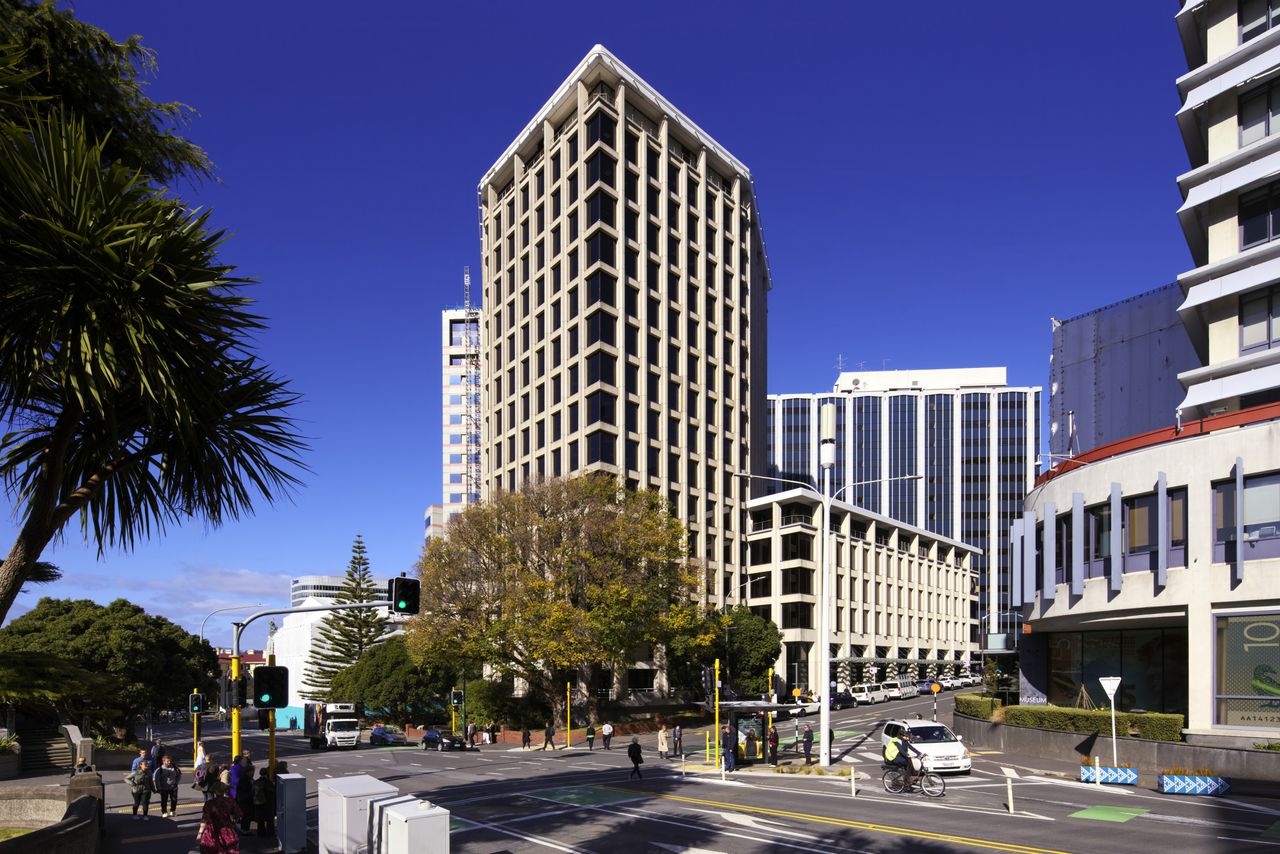
PHOTO: The Treasury (Te Tai Ohanga)
New Zealand’s long-promised housing recovery has suffered another brutal blow.
Treasury has slashed its forecast for house-price growth in 2027 from 4% to just 0.6%—an extraordinary 85% reduction in only a few months.
That is not a minor adjustment. It is effectively an admission that the expected housing rebound has disappeared.
The warning follows mounting evidence that the market is already struggling. As Property Noise recently reported, property values have started falling again as the supposed 2026 recovery begins to unravel.
A recovery in name only
For homeowners who have spent years waiting for values to recover, Treasury’s new forecast will be difficult reading.
House prices remain well below their pandemic-era peaks in many parts of the country. Higher mortgage rates, weak household confidence and a growing supply of properties for sale continue to place pressure on the market.
A forecast increase of only 0.6% would be barely noticeable—and could represent a fall in real terms once inflation is considered.
The promised recovery now looks less like a rebound and more like an extended period of stagnation.
What happened to the predicted rebound?
Treasury has identified three major forces holding prices back:
- Higher interest rates
- Increasing housing supply
- Lower net migration
Together, these factors have weakened buyer demand while giving purchasers considerably more choice.
The Reserve Bank’s battle against inflation has kept borrowing costs elevated, reducing the amount buyers can borrow and making existing mortgages more expensive.
At the same time, more homes are competing for a smaller pool of confident purchasers. Property Noise previously examined why New Zealand’s much-discussed property recovery never truly arrived.
Sales are already losing momentum
Prices are only part of the problem.
Sales activity has also shown signs of weakening, suggesting buyers are becoming increasingly cautious. Earlier Property Noise analysis revealed that sales volumes were falling while house prices remained under pressure.
When fewer properties sell, the consequences spread across the industry. Vendors wait longer, agents compete for fewer transactions and businesses connected to property turnover—from mortgage advisers to removal companies—feel the slowdown.
The economy may be growing—but households are not feeling it
Treasury still expects annual economic growth to peak at 3% by March 2028, only slightly below the 3.2% forecast at the Budget.
Unemployment is forecast to decline from 5.6% to 4.3% by 2030, while inflation is expected to fall below 2% during 2027.
On paper, that sounds encouraging.
But those longer-term projections provide little comfort to households dealing with expensive mortgages, rising living costs and uncertainty over employment.
An economy can technically be recovering while homeowners and prospective buyers remain under considerable financial pressure.
The oil shock has changed the equation
Treasury says conflict in the Middle East has delayed, rather than derailed, New Zealand’s economic recovery.
Higher oil prices are increasing costs across transport, production and household spending. If energy prices remain elevated, inflation could stay higher for longer—making it harder for interest rates to fall.
That would be particularly damaging for housing.
The market has been relying heavily on the expectation that lower mortgage rates would bring buyers back. If meaningful relief is delayed, house-price growth could remain weak well beyond 2027.
Treasury’s forecast may already be too optimistic
There is another worrying detail: the forecasts were completed in mid-August.
That means they may not fully reflect the prolonged rise in crude-oil prices or recent increases in government borrowing costs around the world.
If inflation remains persistent and wholesale interest rates stay high, even Treasury’s reduced 0.6% house-price forecast could prove optimistic.
Not every region will perform the same
A national figure can conceal considerable differences between individual markets.
Auckland and Wellington have experienced heavier pressure, while parts of Canterbury, Otago and Southland have shown greater resilience. Our breakdown of New Zealand’s biggest property-market winners and losers in 2026 shows how uneven the market has become.
Some locations may still record modest growth, but others could continue sliding as listings increase and buyers remain cautious.
Sellers face a difficult reality
Vendors may need to adjust their expectations.
Properties priced according to peak-market memories could sit unsold while newer or more realistically priced listings attract the limited pool of active buyers.
The gap between what sellers want and what purchasers are prepared—or able—to pay could become the defining feature of the market.
For agents, honest conversations about price will be essential. Winning a listing with an inflated appraisal may become increasingly risky if that property then remains on the market for months.
Buyers have more power—but affordability remains the barrier
The slowdown is not entirely bad news for purchasers.
Buyers may have more negotiating power, less fear of missing out and more time to conduct proper due diligence. First-home buyers may also find opportunities among motivated vendors.
However, lower prices do not automatically make property affordable. Mortgage repayments, deposit requirements, insurance, council rates and general living expenses remain substantial barriers.
Anyone considering a purchase should also compare established homes with new construction. Property Noise has explored the changing equation in Build or Buy in 2026? The Answer Might Surprise New Zealand Home Buyers.
Is this the housing recovery that never arrived?
Treasury’s downgrade should force the property industry to confront an uncomfortable possibility.
New Zealand may not be experiencing a temporary pause before another major boom. Instead, the country could be moving into a prolonged period of flat prices, cautious buyers and intense competition for every transaction.
That would be a major adjustment for an industry accustomed to relying on rising values, population growth and cheap credit.
The Property Noise view
Cutting a house-price forecast from 4% to 0.6% is not a technical revision. It represents a dramatic collapse in expectations.
The housing market is being squeezed by elevated borrowing costs, subdued migration, increasing supply and households with less money to spend.
There may still be opportunities for well-prepared buyers and realistic vendors, but the wider message is clear:
The great New Zealand housing recovery has not merely been delayed—it may never have properly begun.