










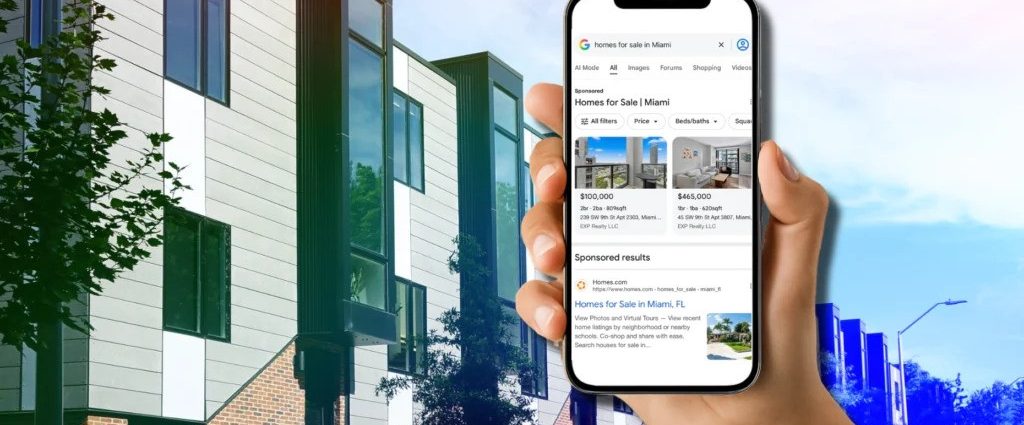
PHOTO: Google’s New Property Advertising Platform. FILE
How Google’s New Property Advertising Platform Could Transform Real Estate Lead Generation In New Zealand
The real estate industry has spent years worrying about competition from portals such as Zillow, Realtor.com, Domain and realestate.com.au.
Now there is a much bigger player entering the conversation.
Google.
The technology giant has announced it is expanding enhanced real estate listing advertisements across all 50 U.S. states, a move that could fundamentally change how buyers find homes and how agents generate leads.
While the rollout is currently limited to the United States, the implications for New Zealand’s real estate industry could be enormous.
History tells us that when Google tests and refines a successful product in the United States, international expansion often follows.
If that happens, New Zealand real estate agents, portals and consumers may be facing one of the biggest shifts in property marketing since Trade Me Property first launched.
🏠 What Has Google Actually Done?
Google has expanded its enhanced Local Services Ads platform to include live property listings directly within search results.
Instead of simply displaying links to property websites, Google is now showing:
- Property photos
- Asking prices
- Key property features
- Contact options
- Viewing requests
- Direct links to local agents
All without the user leaving Google.
In simple terms, Google is moving closer to becoming a property portal itself.
Join Forces with New Zealand’s Premier Independent Real Estate News Aggregation Platform
📱 Why This Is A Big Deal
For years, the online property journey has looked something like this:
Google Search → Trade Me Property → Agent Website → Enquiry
Google now wants to remove some of those steps.
Their objective is simple:
Keep users inside Google’s ecosystem for longer.
The longer buyers stay on Google, the more advertising opportunities Google creates.
🎯 What This Means For Real Estate Agents
Traditionally, agents relied heavily on:
- Trade Me Property
- Realestate.co.nz
- Company websites
- Social media
- Print advertising
Google’s new model inserts itself directly into the middle of the lead generation process.
Potential buyers searching:
“houses for sale near me”
or
“homes for sale Auckland”
could eventually see active listings and direct contact options immediately inside Google search results.
The result?
The battle for online visibility becomes even more competitive.
🇳🇿 Why New Zealand Should Care
Many Kiwi agents may look at this announcement and assume it is purely an American issue.
That would be a mistake.
Google has a long history of testing products in large overseas markets before expanding them internationally.
Examples include:
- Google Business Profiles
- Google Maps advertising
- Google Shopping
- Local Service Ads
All eventually expanded well beyond the United States.
If property advertising proves successful, New Zealand could easily become a future target market.
💥 Trade Me Property Could Face Its Biggest Challenge Yet
For many years, Trade Me Property has dominated New Zealand’s online property marketplace.
Most property searches begin there.
However, Google’s latest move highlights a potential future challenge.
Why visit a property portal if Google shows listings directly?
Why click away if photos, prices and contact options already appear in search?
While Trade Me remains deeply entrenched in New Zealand consumer behaviour, Google’s scale makes it impossible to ignore.
🤖 AI Is Accelerating The Change
This announcement arrives at the same time artificial intelligence is rapidly reshaping property search.
Major international property companies are already integrating listings into AI-powered search experiences.
Consumers are increasingly asking questions like:
- Find me a four-bedroom home near good schools.
- Show me homes under $900,000 with sea views.
- Find investment properties with strong rental yields.
Rather than searching traditional websites, many buyers are beginning to use conversational AI tools.
This trend could significantly alter how future property enquiries are generated.
📉 Could This Put Pressure On Agent Commissions?
Potentially.
Recent international research suggests AI and technology may place downward pressure on traditional real estate commission structures.
Why?
Because technology is increasingly handling tasks previously performed by agents:
- Property discovery
- Market research
- Lead generation
- Initial buyer enquiries
- Appointment booking
While skilled agents will always add value through negotiation and relationship management, technology is steadily reducing friction throughout the transaction process.
🔍 The Future Of Property Search
Imagine a future New Zealand buyer searching:
“Best family home in Palmerston North under $850,000”
Google could potentially display:
🏠 Live listings
📸 Photos
📍 School information
🚗 Commute times
📈 Property history
☎️ Direct contact buttons
All without leaving the search page.
That future may be closer than many people realise.
🏢 What Agents Should Be Doing Now
Forward-thinking agents should already be preparing for greater reliance on search visibility.
That means:
Invest In Your Google Presence
Google Business Profiles are becoming increasingly important.
Create Quality Content
Market updates, suburb profiles and local expertise help improve visibility.
Focus On Personal Branding
Consumers increasingly choose people rather than companies.
Build Direct Databases
Relying entirely on third-party platforms creates risk.
Embrace AI Rather Than Fear It
The most successful agents will likely use AI to improve efficiency rather than compete against it.
📍 Property Noise View
Google’s latest move is about far more than property advertising.
It is about control.
Control of traffic.
Control of leads.
Control of the property search experience.
For now, New Zealand agents can watch from the sidelines.
But history suggests what happens in the United States today often arrives here tomorrow.
If Google eventually launches similar property advertising products in New Zealand, the impact could be significant for agents, portals and consumers alike.
The question is no longer whether technology will reshape real estate.
The question is who will adapt fastest when it does.