

PHOTO: Like many sales industries, real estate often follows the 80/20 principle.
Falling Sales Volumes Raise Big Questions About The Future Of The Industry
New Zealand’s real estate industry is facing an uncomfortable question.
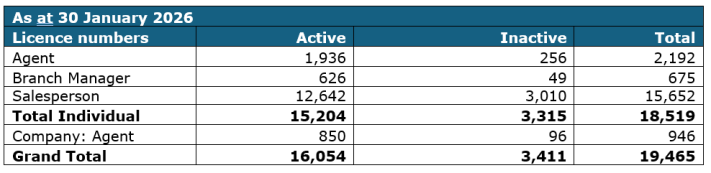
Does the country really need more than 16,000 licensed real estate salespeople?
At a time when property sales remain well below the boom years of 2020 and 2021, many industry observers are questioning whether New Zealand has simply become oversaturated with agents.
While agencies continue recruiting, training and onboarding new salespeople, transaction volumes have fallen significantly from their pandemic-era highs.
The result?
More agents chasing fewer listings.
More competition for commissions.
And growing pressure on the industry’s profitability.
NEW | Access New Zealand’s Ultimate Real Estate Agent Database — 18,000+ Agents & Agencies Included
📊 The Numbers Tell An Interesting Story
New Zealand has a population of approximately 5.3 million people.
Yet there are more than 16,000 licensed real estate salespeople operating across the country.
That means there is roughly:
1 Real Estate Salesperson For Every 330 New Zealanders
When children, retirees and people who never buy or sell property are removed from the equation, the ratio becomes even more striking.
For an industry built around property transactions, that raises an obvious question.
Are there enough sales to go around?
REA licensing statistics (30 January 2026)
SOURCE: REA
📉 Property Sales Have Fallen From Peak Levels
During the Covid property boom, homes were selling rapidly.
Auctions were packed.
Listings were scarce.
Buyers were desperate.
Agents were completing transactions at record levels.
Those days are largely gone.
Today’s market is very different:
- Higher interest rates
- Increased stock levels
- Longer selling times
- More cautious buyers
- Greater vendor competition
While activity has improved from the lows of 2023 and 2024, the market remains well below peak transaction levels.
💰 How Many Agents Actually Sell Property?
This is perhaps the biggest question facing the industry.
Although thousands of people hold real estate licences, not all are actively selling property.
Industry insiders often acknowledge that a relatively small percentage of agents complete the majority of transactions.
In many offices:
- Top performers dominate listings
- Experienced agents control market share
- Newer agents struggle to gain traction
- Some agents sell very few properties annually
The reality is that holding a licence and earning a sustainable income are two very different things.
🏆 The Top 20% Rule
Like many sales industries, real estate often follows the 80/20 principle.
A small percentage of agents generate a disproportionate share of results.
The top performers typically have:
- Established databases
- Strong referral networks
- High visibility within their communities
- Repeat business
- Significant marketing budgets
Meanwhile many newer agents face intense competition simply to secure appointments.
🤔 Why Do Agencies Keep Recruiting?
If transaction volumes are under pressure, why do agencies continue adding agents?
The answer is relatively simple.
Real estate is often viewed as a low-risk recruitment model.
Many agents operate as independent contractors.
For agencies:
- Additional agents increase market coverage
- More agents create more prospecting activity
- Agency overheads are often shared
- Only successful sales generate commission payments
From a business perspective, recruitment remains attractive.
For individual agents, however, success is far from guaranteed.
📱 Technology Is Changing The Game
The traditional role of the real estate salesperson is also evolving rapidly.
Today’s consumers have access to:
- Trade Me Property
- Realestate.co.nz
- Property valuation platforms
- Social media marketing
- Artificial intelligence tools
- Automated property alerts
Information that once belonged exclusively to agents is now widely available.
As technology continues advancing, some industry commentators believe the number of agents required may decline over time.
🤖 Will AI Reduce Agent Numbers?
Artificial intelligence is already beginning to automate many tasks previously completed manually.
These include:
- Listing descriptions
- Social media content
- Market reports
- Database marketing
- Lead nurturing
- Customer service enquiries
While AI is unlikely to replace top-performing agents anytime soon, it may reduce the number of support functions and entry-level activities traditionally used by newer salespeople.
📍 Regional Markets Feel The Pressure
The issue becomes even more pronounced in smaller communities.
In some regional centres:
- Listing numbers remain limited
- Population growth is modest
- Competition between agents is intense
With fewer transactions available, maintaining a viable business can become increasingly difficult.
🏠 Consumers May Be The Winners
Greater competition among agents does create some benefits for homeowners.
More competition can mean:
✅ Better service
✅ More marketing innovation
✅ Increased agent availability
✅ Stronger negotiation efforts
However, it can also create pressure on commission structures as agents compete for business.
💬 The Commission Debate Isn’t Going Away
As more agents enter the industry and competition intensifies, commission structures continue attracting scrutiny.
Many homeowners are asking:
- Why do commissions remain percentage-based?
- Why does selling a $2 million home cost substantially more than selling a $1 million home?
- Is technology reducing the workload involved?
These questions are becoming increasingly common as consumers become more informed.
📊 The Future Of The Industry
The real estate industry is unlikely to disappear.
People will always need trusted advice when buying and selling property.
However, the structure of the industry may continue changing.
Potential future trends include:
- Fewer full-time agents
- Greater use of technology
- More specialist agents
- Increased personal branding
- Alternative commission models
- Greater reliance on databases and digital marketing
📍 Property Noise View
The issue isn’t whether New Zealand has too many real estate agents.
The real question is whether the current number of agents is sustainable given transaction volumes.
In boom markets, almost everyone can survive.
In slower markets, performance matters.
As technology reshapes the industry and competition intensifies, the gap between top performers and everyone else may continue to widen.
The next five years could prove to be some of the most transformative the New Zealand real estate industry has ever experienced.