



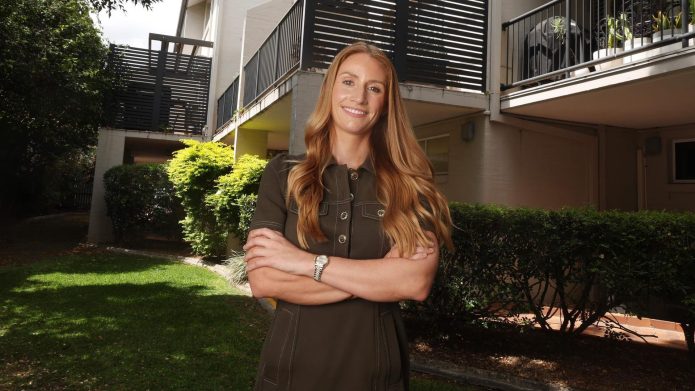

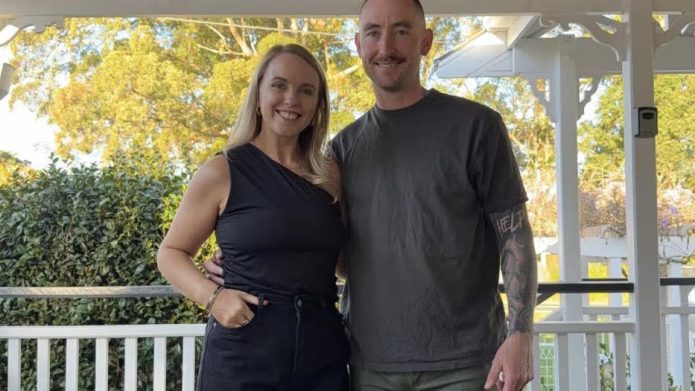





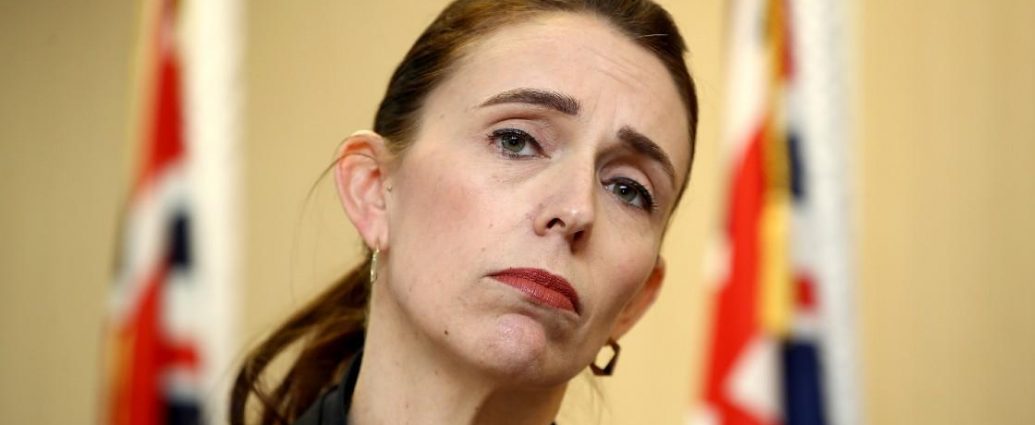
PHOTO: Reports describe the Sydney purchase as highly private, with identifying details withheld from current online marketing.
Former New Zealand prime minister Jacinda Ardern and her husband, Clarke Gayford, have reportedly purchased a $5.3 million home on Sydney’s Northern Beaches.
The five-bedroom property represents one of the area’s largest sales of the year and confirms that the family’s move across the Tasman appears to be more than a temporary arrangement.
It is a significant property story—but it raises a much more serious question.
Has New Zealand become a country in which one of its most recognisable former leaders no longer feels able to live safely and normally?
There is no public confirmation that security concerns caused the move. Ardern’s spokesperson has said the family is based in Australia because of work and because Sydney offers easier access to New Zealand.
However, it would be naïve to discuss the relocation without acknowledging the extraordinary abuse, threats and personal hostility Ardern experienced during and after her time as prime minister.
A home purchase surrounded by secrecy
Reports describe the Sydney purchase as highly private, with identifying details withheld from current online marketing.
That level of secrecy makes sense.
Ardern is not simply a former politician enjoying retirement. She remains an internationally recognised public figure associated with the Christchurch mosque attacks, gun-law reform, the COVID-19 response and the Christchurch Call campaign against online terrorism and violent extremism.
She has attracted both extraordinary international admiration and intense personal hostility.
For most families, buying a house involves balancing price, location, schools, work and lifestyle.
For Ardern’s family, the security assessment is likely to be considerably more complex.
A potential home must provide privacy. Access points, neighbouring properties, surrounding roads and public visibility may all matter. The family must consider how easily their movements can be monitored and whether their daughter can live without constantly being identified through her mother.
We cannot know the family’s private security advice. But these are reasonable considerations for any former national leader who has received serious threats.
The threats were real
The hostility directed at Ardern extended far beyond ordinary political disagreement.
She became the focus of conspiracy movements, anti-government rage and misogynistic abuse. Some people sent violent threats directly to her office.
In one widely reported case, a man sent emails containing death threats against Ardern. His conviction was later overturned on appeal because of legal issues surrounding the required intent, but the threatening communications themselves illustrate the disturbing environment surrounding her.
Reporting at the time of her resignation suggested that she could require an unprecedented level of continuing security for a former New Zealand prime minister because of the volume and severity of the threats she had faced.
The danger does not disappear simply because a politician leaves office.
In some cases, losing the security structure surrounding a serving prime minister can make ordinary life more difficult. A former leader may no longer travel within the same protective bubble, but their public profile—and the resentment directed at them—can remain.
New Zealand’s size creates a security problem
New Zealand is a small country.
That closeness is one of its strengths, but it can become a vulnerability for a polarising former leader.
There are only so many places where a globally recognised New Zealander can live with genuine anonymity. People quickly identify a neighbourhood, school, supermarket, café or holiday destination. Photographs and location details can spread across social media within minutes.
In a small population, information travels quickly.
Ardern could purchase a secluded property in New Zealand, but seclusion can create its own security difficulties. A remote home may provide privacy, yet it can also mean fewer neighbours, longer emergency-response times and limited access to specialist protection.
Living in a major Australian city offers a different kind of anonymity.
Sydney has more than five million residents. International celebrities, senior business figures, diplomats and politicians already live there. Security firms and police are accustomed to managing high-profile individuals, while a former New Zealand prime minister can blend into a much larger population more easily than she could in Auckland or Wellington.
Australia is not free from political extremism or security threats. Its intelligence agencies continue to warn about a serious and evolving threat environment.
But Sydney may offer Ardern something New Zealand struggles to provide: distance without complete separation.
She can remain close to home while gaining a degree of physical and social anonymity.
A larger country provides more layers of protection
Security is not simply about employing guards.
It is also about creating distance between a person and those who may wish to intimidate, harass or harm them.
A large city provides more residential options, controlled-access buildings, private schools, specialist security services, alternative transport routes and a wider circle of people who are accustomed to protecting high-profile clients.
It also makes pattern-tracking more difficult.
In New Zealand, the regular movements of a well-known former prime minister could become familiar quickly. In Sydney, there are more routes, more venues and more opportunities to avoid predictable routines.
Again, there is no evidence that this reasoning drove the family’s decision. It is an inference based on the publicly known threats and the practical realities of protecting a globally recognisable person.
The threat environment has not disappeared
New Zealand’s national terrorism threat level is currently described as “possible”, meaning authorities assess that a domestic terrorist attack could occur.
The NZSIS says violent extremists are often drawn into dangerous ideologies through political, social or economic grievances. The agency continues to identify violent extremism and terrorism among its key national-security priorities.
That does not mean Ardern faces a specific or imminent threat.
It does mean the wider environment in which public figures operate remains volatile.
Ardern became a symbolic target for several overlapping grievance communities. To some, she represents gun restrictions. To others, she represents vaccination mandates, lockdowns, global institutions or progressive politics.
Once a person becomes a central character in online conspiracy narratives, changing jobs does not necessarily remove them from those narratives.
Digital hatred can outlive political office.
The hidden cost of public leadership
The public will inevitably debate the price of Ardern’s new home.
Some will focus on how a former Labour prime minister could afford a $5.3 million Sydney property. Others will question why she chose Australia or interpret the purchase through their existing political views.
Those are legitimate areas of public curiosity, particularly when the buyer is a former prime minister.
But the purchase price should not obscure the more human issue.
Jacinda Ardern has a husband and a young daughter. Whatever anyone thinks of her politics, her family is entitled to live without intimidation, stalking or threats of violence.
No former leader should have to choose their home according to how quickly police or security personnel could reach it.
No child should have to grow up under permanent public hostility because of decisions made by a parent while serving in office.
Australia offers proximity without the same intensity
Sydney allows Ardern to remain only a short flight from New Zealand.
It also provides access to international work, major airports, professional opportunities and a larger network of global organisations. Her post-political roles include work connected with the Christchurch Call, Harvard University and the Earthshot Prize.
From a career perspective, Australia makes sense.
From a security perspective, it may make even more sense.
She remains near New Zealand without being constantly accessible to the people who have turned their political anger into a deeply personal campaign against her.
The move creates a buffer.
What this says about New Zealand
Ardern’s relocation should prompt reflection well beyond party politics.
New Zealanders have every right to criticise former prime ministers. Ardern’s government made major decisions that affected livelihoods, businesses, families and civil liberties. Those decisions should continue to be examined and debated.
But democratic criticism ends where intimidation and threats begin.
If sustained hatred has contributed in any way to a former prime minister deciding that her family can live more freely in another country, that is not a victory for her opponents.
It is a failure for New Zealand.
A mature democracy must be able to strongly criticise its leaders without making their continued presence in the country unsafe.
The Property Noise view
Jacinda Ardern’s Sydney purchase is more than a story about a spectacular house and a $5.3 million price tag.
It may also represent the physical cost of becoming one of the most polarising figures in modern New Zealand history.
We cannot state that Ardern left New Zealand because of security concerns. She has not said that, and her spokesperson has given work and family proximity as the explanation.
But it is reasonable to conclude that security, privacy and the welfare of her daughter would form part of any decision about where the family could establish a permanent home.
Sydney offers scale, anonymity and distance while keeping New Zealand close.
The saddest possibility is that Ardern has not rejected New Zealand.
New Zealand may simply no longer offer her family the privacy and security required to live an ordinary life here.