

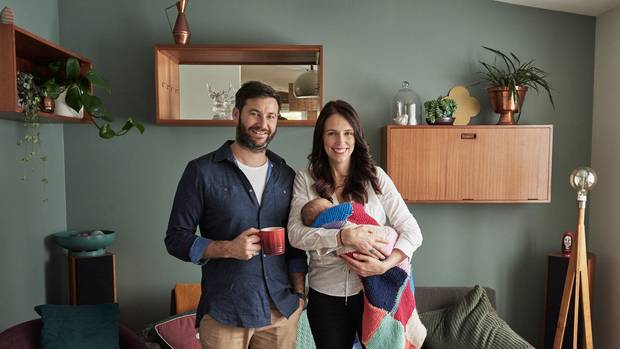






PHOTO: Ex Prime Minister Jacinda Ardern and partner Clarke Gayford
Jacinda Ardern has sold the Auckland home that carried her through the most consequential years of her political life—and the transaction may represent something much bigger than a profitable property deal.
The former New Zealand prime minister and her husband, Clarke Gayford, have reportedly sold their four-bedroom Sandringham bungalow for NZ$2.5 million after withdrawing it from public auction and completing a private negotiation.
The couple purchased the property for approximately $1.74 million in 2018, producing a gross increase of around $760,000 before commission, marketing expenses, legal costs, improvements and other ownership expenses are considered.
But the money is not the most significant part of this story.
Ardern and Gayford have now sold their New Zealand family home, relocated to Australia and purchased a $5.3 million house in Dee Why on Sydney’s Northern Beaches.
Taken together, those decisions appear to represent more than an extended overseas stay.
They look like a permanent change of country.

Ardern has offloaded her Auckland home for NZ$2.5 million, or about $2 million.
The Auckland chapter is over
The Sandringham home was purchased while Ardern was prime minister and became the family’s private base through an extraordinary period in New Zealand history.
She lived there while leading the country through the Christchurch mosque attacks, the Whakaari White Island disaster, the COVID-19 pandemic, national lockdowns, vaccination mandates and some of the most divisive political years New Zealand has experienced.
The property also appeared in the documentary Prime Minister, providing viewers with a rare glimpse of Ardern’s life away from Parliament.
Set on approximately 643 square metres, the bungalow reportedly includes four bedrooms, multiple living spaces, a private main suite, French doors, a north-facing garden and a separate garden studio.
Electronic gates and a fully fenced section offered a degree of privacy that would have been particularly valuable for one of New Zealand’s most recognisable families.
Property Noise first reported on the marketing campaign in Jacinda Ardern’s Auckland Home Sold: What the High-Profile Auction Reveals About New Zealand’s Property Market.
At that point, the property’s final price had not been publicly confirmed.
It now appears that the home sold for $2.5 million through a private negotiation after failing to sell under the hammer at its public auction.
Jacinda Ardern’s $5.3m Sydney Move Raises an Uncomfortable Question
A $760,000 gross property gain
On paper, the numbers look impressive.
| Jacinda Ardern’s Auckland property | Amount |
|---|---|
| Purchase price in 2018 | $1.74 million |
| Reported 2026 sale price | $2.5 million |
| Gross increase | $760,000 |
| Percentage increase | Approximately 43.7% |
That does not mean Ardern and Gayford simply pocketed a tax-free $760,000 profit.
The gross increase does not account for mortgage interest, property improvements, maintenance, rates, insurance, legal expenses, agency commission or marketing costs.
However, the transaction still represents a strong result during an extremely difficult period for Auckland property.
Many Auckland homeowners have watched values decline substantially from their pandemic-era peaks. Buyers have abundant choice, selling campaigns are taking longer and vendors no longer possess the negotiating power they enjoyed during the boom.
Against those conditions, achieving $2.5 million for the Sandringham home represents a significant sale.
Why was the property sold quietly?
The home was initially taken to auction but did not sell publicly under the hammer.
Ray White listing agent Tim Hawes reportedly described the eventual transaction as being completed “off the floor” at a closed auction, with the price negotiated privately.
For an ordinary vendor, moving from a public auction to private negotiations is unremarkable.
For Jacinda Ardern, privacy would have been particularly important.
Publishing detailed information about the timing of the transaction, the family’s movements or the identity of the purchaser could have attracted an extraordinary level of attention.
The quieter sale process allowed the parties to reach an agreement without turning the home into another political spectacle.
From Sandringham to Sydney’s Northern Beaches
The Auckland sale comes shortly after Ardern and Gayford reportedly paid A$5.3 million for a five-bedroom house in Dee Why.
The Sydney property offers ocean views and places the family on the city’s Northern Beaches, within reach of major international travel connections while remaining only a relatively short flight from New Zealand.
Property Noise examined the relocation in Jacinda Ardern’s $5.3m Sydney Move Raises an Uncomfortable Question.
Ardern’s representatives have said the family is based in Australia because of work and because Sydney makes it easier to spend time in New Zealand.
That explanation is entirely plausible.
Ardern’s international work includes roles and projects connected with Harvard University, the Christchurch Call and the Earthshot Prize. Sydney offers stronger international connections, a much larger professional environment and direct access to major global markets.
But the sale of the Auckland home changes the appearance of the move.
This no longer looks like a family temporarily renting overseas while deciding what to do next.
They have sold their New Zealand base and purchased a multimillion-dollar family home in Australia.
Sold—and never coming back?
Nobody outside the family can state that Ardern will never return to live in New Zealand.
Circumstances change. Families move. Careers evolve. People frequently return home after years abroad.
However, the combined property decisions strongly suggest that the family does not currently intend to resume an ordinary Auckland life.
Selling the Sandringham house removes their most significant residential connection to New Zealand.
Buying a five-bedroom Sydney home establishes something much more substantial than temporary accommodation.
The family now has a permanent base, employment opportunities and greater anonymity in Australia.
New Zealand may always be home emotionally.
But in practical property terms, Ardern and Gayford appear to have moved on.
The uncomfortable security question
There is no public confirmation that security concerns caused the family to relocate.
That distinction is essential.
Ardern’s office has cited employment and easier access to New Zealand—not threats—as the reason for basing the family in Sydney.
However, it would be unrealistic to discuss the decision without acknowledging the extreme hostility Ardern experienced while serving as prime minister.
She became the focus of conspiracy theories, misogynistic abuse, anti-government anger and violent rhetoric.
Some people went far beyond legitimate criticism of her government’s decisions and turned their political resentment into deeply personal hatred.
Threatening messages were sent to her office. Protesters gathered outside political events. Her image became central to online conspiracy communities driven by anger over lockdowns, vaccine requirements, gun-law reform and international institutions.
Whatever anyone thinks about Ardern’s political record, that level of personal hostility creates a genuine security issue for her husband and daughter as well.
Leaving office does not make the threats disappear
Political office ends.
Public recognition does not.
Ardern remains one of the most internationally recognisable New Zealanders in the world. Her face is associated with the Christchurch response, pandemic restrictions, gun-law reform and progressive international politics.
For supporters, she remains an admired global figure.
For some opponents, she remains a symbol of everything they resent.
Leaving Parliament does not automatically remove a person from the conspiracy theories built around them.
In some respects, life can become more complicated after leaving office.
A serving prime minister receives continual protection from the New Zealand Police Dignitary Protection Service. Former leaders do not necessarily retain the same permanent protective structure, even though their public profile and the hostility directed toward them may remain.
Police can provide security according to assessed need, but a former prime minister attempting to live an ordinary family life faces a very different reality from a serving leader moving between controlled official environments.
Why Sydney may feel safer
Australia is not immune from extremism, harassment or politically motivated violence.
But Sydney offers something New Zealand cannot easily provide: scale.
With more than five million residents, the city is home to international celebrities, diplomats, senior executives, athletes and other high-profile people.
That creates:
- Greater anonymity
- More secure residential options
- Specialist private-security services
- Multiple transport routes
- Major international airports
- A larger professional network
- Less public familiarity with the family’s daily movements
In New Zealand, it would take very little time for people to identify the neighbourhood, supermarket, café or school used by a globally recognised former prime minister.
A photograph posted online could disclose a location within minutes.
Sydney creates distance without cutting the family off from New Zealand.
Ardern can remain close to home while avoiding some of the intensity that would follow her daily life in Auckland or Wellington.
A former prime minister who became a property millionaire
Ardern’s property wealth has attracted public attention for years.
In 2017, Property Noise reported that Jacinda Ardern had become a property millionaire following substantial increases in Auckland valuations.
The latest transactions take that story into a new phase.
The couple have exited their Auckland property at $2.5 million and established themselves in a much more expensive Sydney home.
That does not make them unusual among internationally successful professionals relocating between New Zealand and Australia.
But Ardern is not an ordinary homeowner.
Every property transaction involving a former prime minister inevitably becomes part real estate story, part political story and part public debate about wealth.
The sale price will divide opinion
Some New Zealanders will congratulate Ardern and Gayford on a successful sale.
Others will question how a former Labour prime minister came to own property worth millions or criticise the family for choosing Australia.
Those arguments are inevitable.
But the $760,000 gross increase must be placed in context.
The property was held for approximately eight years through an extraordinary housing boom, a subsequent correction and years of ownership expenses.
It was also their family home—not a speculative property purchased and quickly resold.
A strong sale price does not erase the financial costs of ownership, and the gross increase should not be confused with the amount the couple ultimately retained.
What this says about New Zealand
This story is bigger than one Auckland bungalow.
New Zealand regularly loses highly skilled and internationally connected people to Australia because its larger cities offer greater employment opportunities, higher incomes and easier access to global markets.
Ardern’s circumstances are obviously unique, but her relocation reflects a familiar pattern: sell in New Zealand, cross the Tasman and establish a new life in Sydney, Melbourne, Brisbane or the Gold Coast.
The difference is that few New Zealand emigrants leave after becoming the target of years of threats and deeply personal abuse.
If security and privacy played any role in the decision—and that remains an inference rather than a confirmed fact—New Zealand should consider what that says about the way political disagreement has changed.
Criticism is essential in a democracy.
Threats are not.
The Property Noise view
Jacinda Ardern and Clarke Gayford have now completed the clearest possible property break from their former Auckland life.
The Sandringham home has sold for $2.5 million.
A five-bedroom Dee Why property has been purchased for A$5.3 million.
The family is living in Sydney.
Their work increasingly sits within an international environment.
All the available evidence points toward Australia becoming their permanent base for the foreseeable future.
It would be wrong to claim that Ardern has confirmed she will never return to New Zealand. She has not.
It would be equally unrealistic to pretend these are the actions of someone planning to move back soon.
The Auckland home that carried Ardern through her premiership now belongs to someone else.
Her family’s future appears to be in Sydney.
Perhaps the saddest question is not whether Jacinda Ardern is coming back.
It is whether the threats, hostility and loss of privacy surrounding her public life mean she no longer believes her family can live normally here.