
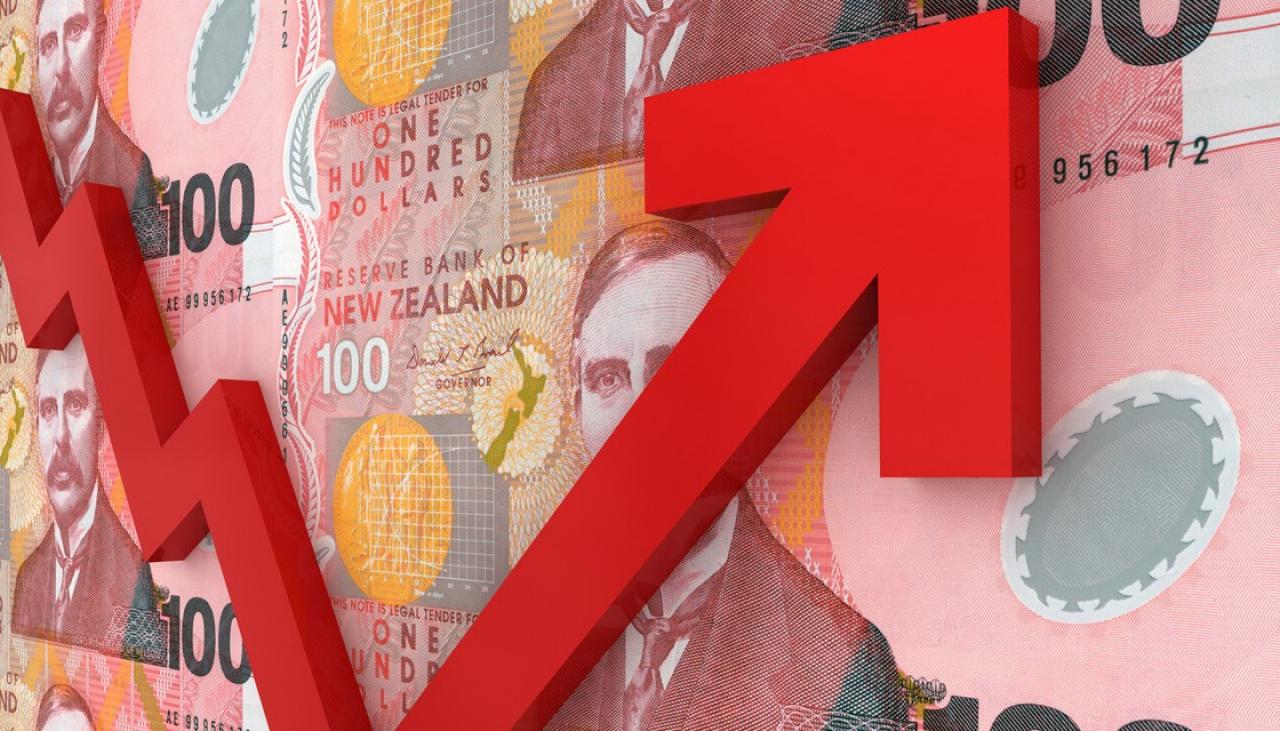
PHOTO: According to REINZ, the latest 25-basis-point OCR increase was widely expected and is “unlikely to materially shift the current housing market.”
The Reserve Bank raises the Official Cash Rate to 2.75%.
Mortgage rates have already moved higher.
House prices remain flat nationally.
Buyers are cautious.
Stock is elevated.
Job insecurity remains a problem.
And what does the Real Estate Institute of New Zealand tell the market?
Essentially:
Don’t expect it to make much difference.
According to REINZ, the latest 25-basis-point OCR increase was widely expected and is “unlikely to materially shift the current housing market.” Its argument is that mortgage rates had already moved in anticipation and buyers and sellers were already factoring the higher-rate environment into their decisions.
Fair enough.
But at Property Noise, we think there’s a bigger issue emerging.
REINZ IS STARTING TO SOUND TOO MUCH LIKE THE INDUSTRY IT REPRESENTS
Let’s be clear about something first.
REINZ is the Real Estate Institute of New Zealand.
It represents the real estate profession.
There is absolutely nothing wrong with that.
But when an organisation that represents an industry continually interprets challenging market developments through the most reassuring possible lens, eventually consumers are entitled to ask:
Are we getting independent market analysis — or industry reassurance?
That’s where credibility matters.
Because the housing market doesn’t need cheerleading.
It needs straight talking.
THE RESERVE BANK ITSELF SOUNDS MORE CAUTIOUS
Compare REINZ’s assessment with what the Reserve Bank is actually saying.
The RBNZ increased the OCR by 25 basis points to 2.75% because inflation had climbed to 4.1%.
More importantly for housing, the Reserve Bank says:
- financial conditions have tightened
- higher wholesale rates have flowed into higher mortgage rates
- weak income growth and job insecurity are weighing on households
- house prices remain flat
- Auckland and Wellington remain particularly weak
- and the OCR may need to rise further if the central outlook eventuates.
That’s hardly irrelevant to property.
The Reserve Bank itself explains that changes in the OCR often flow through to mortgage and other lending rates.
So saying this particular 0.25% rise may already have been priced in is perfectly defensible.
But suggesting the changing interest-rate environment won’t materially alter the market risks missing the bigger picture.
It’s not just this 0.25%. It’s the direction of travel.
REMEMBER WHAT BUYERS WERE TOLD?
For much of the property downturn, the great hope was straightforward:
Interest rates would fall.
Mortgage servicing would become easier.
Buyers would return.
Prices would recover.
The property market would finally get moving again.
But we’re now in September 2026.
And instead of discussing another OCR cut, we’re discussing an OCR hike to 2.75% — with the Reserve Bank saying further increases may be required.
That matters psychologically as much as financially.
A first-home buyer who thought mortgage rates were heading steadily downward now has another reason to wait.
An investor doing the numbers on a marginal rental has another cost consideration.
A homeowner rolling off a cheaper mortgage rate has another reason to be cautious.
And a vendor hoping spring will suddenly unleash hordes of enthusiastic buyers may discover those buyers aren’t quite as enthusiastic as hoped.
EVEN REINZ’S OWN NUMBERS SHOW A CAUTIOUS MARKET
This is perhaps the strangest part.
In the same statement, REINZ acknowledges that inventory was 9.3% higher than July 2025.
It says properties are taking longer to sell.
It says buyers are cautious.
It says buyers have more choice.
And it says some sellers are having to be patient while waiting for the right buyer.
Read those statements again.
More houses available.
Longer selling times.
Cautious buyers.
Patient vendors.
That doesn’t exactly scream:
BOOM INCOMING.
And REINZ isn’t actually claiming there is one.
But this is where language matters.
“PRICED IN” DOESN’T MEAN “DOESN’T HURT”
This distinction is important.
REINZ says mortgage rates had already moved in anticipation of the OCR decision.
That’s probably the strongest part of its argument.
Markets anticipate central-bank decisions.
Banks don’t necessarily wait until 2pm on OCR day before changing mortgage pricing.
But here’s the problem:
If mortgage rates already increased because banks anticipated the OCR rise, the impact hasn’t disappeared.
It arrived earlier.
That’s very different from saying there is no impact.
The Reserve Bank explicitly says higher wholesale interest rates have already resulted in comparable increases in bank mortgage and business lending rates.
In other words:
THE MARKET MAY HAVE PRICED IN THE OCR HIKE — BUT HOMEOWNERS STILL HAVE TO PAY THE MORTGAGE RATE.
THIS IS WHERE REINZ RISKS LOSING CREDIBILITY
REINZ has an important role.
Its housing data is enormously valuable.
Its members are at the coalface of the market.
And its commentary deserves to be heard.
But credibility comes from being prepared to tell your industry things it doesn’t necessarily want to hear.
Sometimes the property market is strong.
Sometimes it’s weak.
Sometimes buyers have the advantage.
Sometimes vendors do.
Sometimes interest-rate movements genuinely don’t matter much.
And sometimes another rate rise lands in a market already struggling to generate meaningful price growth.
The danger for any industry body is becoming so accustomed to finding the positive interpretation that consumers begin discounting what it says.
Because once that happens, even when the organisation is absolutely right, people stop listening.
THE PROPERTY MARKET DOESN’T NEED SPIN
This isn’t an attack on real estate agents.
And it’s not an argument that REINZ’s economic reasoning is completely wrong.
The latest OCR rise was expected.
Mortgage markets had moved beforehand.
And a single 25-basis-point increase is unlikely to suddenly crash New Zealand house prices.
Those are reasonable points.
But neither should we pretend the wider environment is benign.
The Reserve Bank says flat house prices are already weighing on household spending and residential investment.
It says financial conditions have tightened.
It acknowledges job insecurity.
And it says rates may have to go higher.
That’s the environment buyers and sellers are actually operating in.
PROPERTY NOISE TAKE
Perhaps it’s time for REINZ to become a little less concerned about reassuring the market and a little more willing to read the room.
New Zealanders aren’t stupid.
They know mortgage rates have risen.
They know what their repayments are.
They can see how long the house down the road has been sitting on the market.
They can see the price reductions.
They know whether there are ten buyers at an open home or two.
And many remember being told repeatedly that the great property recovery was just around the corner.
So when another piece of potentially negative news arrives and the industry’s response is effectively “it’s already priced in”, scepticism is understandable.
REINZ may ultimately prove correct that this particular OCR increase won’t materially shift the market.
But that’s almost beside the point.
THE REAL CREDIBILITY TEST IS WHETHER AN INDUSTRY BODY IS PREPARED TO CALL A WEAK MARKET A WEAK MARKET.
Because consumers don’t need another sales pitch.
They need credible information.
And credibility is a lot harder to rebuild than house prices.
HAVE YOUR SAY
Is REINZ providing sensible context around the OCR rise — or is the real estate industry becoming too quick to put a positive spin on bad news?
👇 Tell us what you’re seeing in your local market.