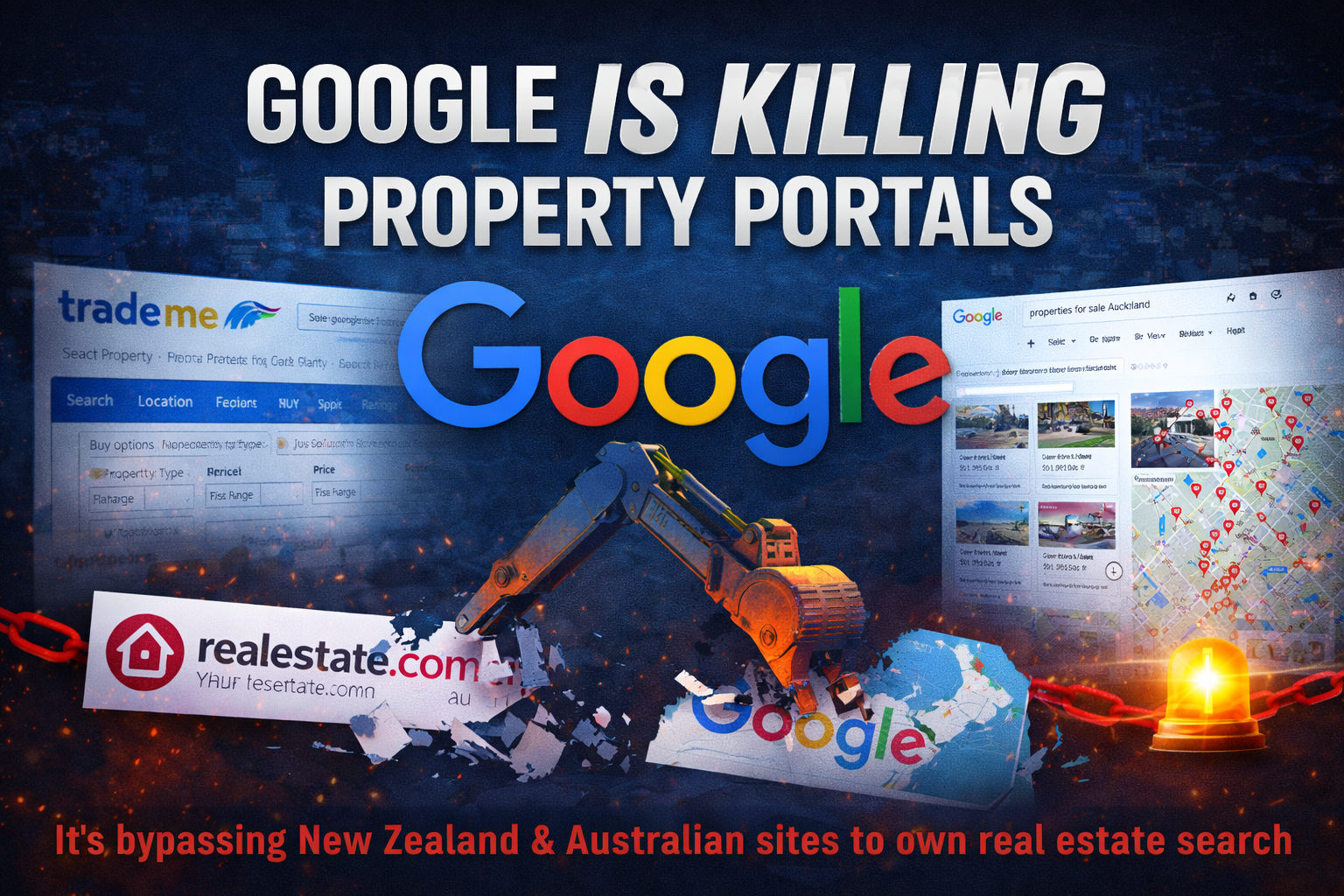
PHOTO: For two decades, the property search journey has been predictable
🔍 The Shift No One in Real Estate Wants to Talk About
For two decades, the property search journey has been predictable:
Buyer → Property portal → Agent → Listing
That model is now under serious threat.
Google is quietly — but deliberately — positioning itself to become the first and last stop for property searches in New Zealand and Australia, and when that happens, the fallout for portals and agent websites will be brutal.
This isn’t speculation.
It’s already happening.

🧠 What Google Is Actually Doing
Google’s core mission is simple: answer the user’s question without sending them elsewhere.
In property, that means:
Showing listings directly in search results
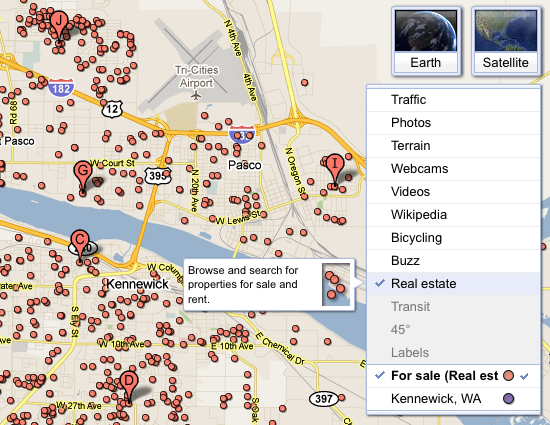
Surfacing homes via Google Maps
Prioritising structured property data
Reducing the need to click through to portals
We’ve already seen this play out in:
Travel (hotels, flights)
Jobs (Google Jobs)
Reviews (Google Business Profiles)
Property is next.
🏠 The Dominant Portals in the Firing Line
🇳🇿 New Zealand
🇦🇺 Australia
Domain
These platforms have thrived by owning search traffic.
But when Google inserts itself above them — with listings, maps, photos, prices and suburb data — portals become just another optional click.
And optional clicks disappear fast.
📉 Why Portals Should Be Nervous
Google doesn’t need to replace portals entirely.
It just needs to:
Answer 70–80% of buyer questions before they click
Keep users inside Google Search and Maps
Push organic portal results further down the page
That alone is enough to:
Slash portal traffic
Reduce lead volumes
Weaken pricing power
Expose how dependent portals are on Google
The same dependency that once fuelled growth becomes the choke point.
🌐 The Collateral Damage: Agent Websites
Here’s the part many agents miss.
This doesn’t just hurt portals — it also bypasses individual agency and agent websites.
If Google:
Displays listings directly
Shows agent contact buttons in Maps
Pulls data from feeds and structured markup
Then:
👉 Buyers don’t need to visit your website
👉 SEO rankings matter less
👉 “Website traffic” stops being the prize
Your site becomes a backend data source, not a destination.
🗺️ Google Maps Is the Silent Assassin
Property search is inherently local.
That’s why Google Maps is so dangerous.
Imagine this buyer journey:
Search “houses for sale near me”
See listings pinned on a map
Click photos, prices, agent details
Message or call directly
No portal.
No agent website.
No referral traffic.
Just Google.
🧩 Why Google Will Win This Battle
Google has advantages portals can’t match:
Unmatched search intent data
Location dominance via Maps
Control of mobile discovery
Ability to integrate AI summaries
Zero reliance on subscription fees
Portals sell access to listings.
Google sells answers.
And buyers want answers faster than ever.
🔄 What This Means for the Industry
❌ Portals lose their monopoly on attention
❌ Agents lose control of buyer journeys
❌ SEO strategies need rewriting
❌ “List it and they will come” stops working
But…
✅ Data becomes king
✅ Brand matters more than portals
✅ Direct relationships outperform platforms
✅ Media, content and authority win
🧠 The Smart Money Is Already Adjusting
The winners in this new world will be:
Agents with strong personal brands
Businesses owning their own databases
Companies publishing content Google trusts
Platforms that don’t rely on portal traffic
This is exactly why owned media, first-party data, and direct audience relationships are becoming more valuable than listings themselves.
🔮 What Happens Next
Expect to see:
Google rolling out richer property panels
Portals paying more for visibility
Agents questioning ROI harder
Buyers interacting less with portals
A major shake-up in how listings are marketed
The real estate industry won’t collapse.
But the way property is discovered absolutely will.
🔑 The Bottom Line
Google isn’t “helping” property search.
It’s taking it over.
And just like travel, jobs, and reviews before it, the platforms that once controlled access are about to find themselves competing with the very search engine they depend on.
The portals built the house.
Google just moved in.