

PHOTO: Queenstown, New Zealand. FILE
Central Otago–Lakes District Breaks the $900 Weekly Rent Barrier
The Central Otago–Lakes District has officially become the most expensive long-term rental market in New Zealand, with average weekly rents surpassing $900 for the first time.
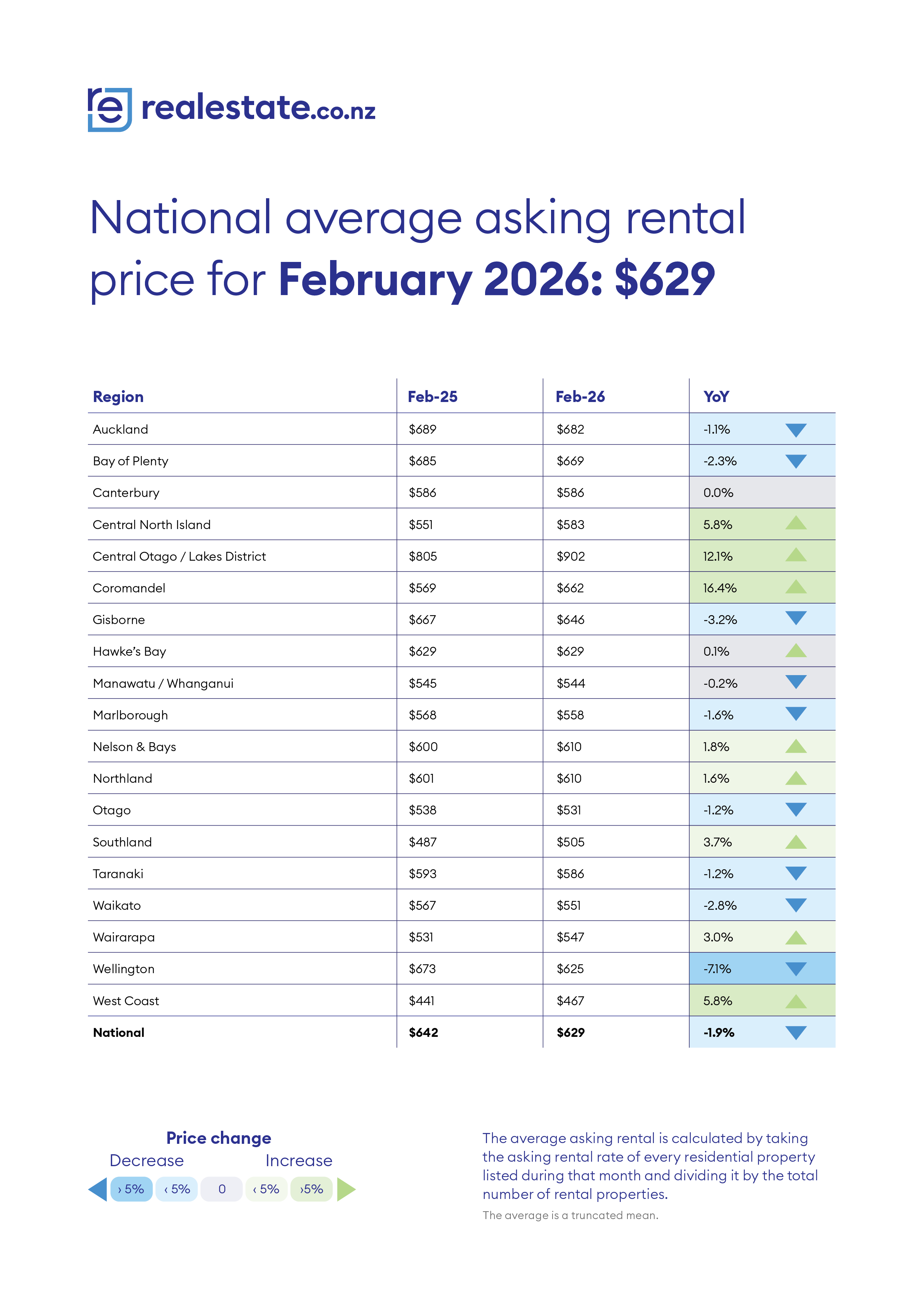
Latest rental data shows the region’s average weekly rent has climbed to $902 per week, setting a new national benchmark and highlighting the extreme demand pressures facing the area.
The surge has been driven largely by rental prices in the country’s tourism powerhouse towns:
-
Queenstown: Average rent of $993 per week
-
Wanaka: Average rent of $924 per week
Meanwhile, neighbouring Central Otago recorded an average weekly rent of $690 in February 2026, representing a 10.8% increase compared with the same time last year.
This makes the Central Otago–Lakes District the first region in New Zealand to cross the $900 weekly rental threshold.
Renters Now Paying $100 More Per Week
The sharp rise means renters in the region are paying dramatically more than they were just a year ago.
In February 2025, the average weekly rent sat at $805 per week. Fast forward twelve months and tenants are now paying nearly $100 more each week on average.
The milestone underscores the region’s rapid transformation from a seasonal holiday destination into one of the country’s most competitive long-term rental markets.
Housing demand continues to surge as workers, investors and lifestyle migrants flock to the scenic alpine region.
National Rents Ease Slightly Despite Regional Pressure
While rents in Central Otago and the Lakes District are soaring, the national rental market is showing signs of cooling slightly.
Across New Zealand the average weekly rent fell to $629 per week, representing a 1.9% decline year-on-year.
The capital city recorded the biggest fall in rental prices:
-
Wellington rents dropped 7.1%
-
From $673 per week in February 2025
-
To $625 per week in February 2026
Despite these national declines, the Central Otago–Lakes District continues to operate in a completely different price bracket.
Queenstown and Wanaka Driving the Surge
Industry analysts say the region’s unique combination of limited housing supply and strong population growth is pushing rents to record levels.
Demand for housing remains extremely high due to:
-
Tourism and hospitality jobs
-
International migration
-
Lifestyle relocation
-
Limited land supply
The result is an ongoing supply-and-demand squeeze that continues to push rental prices higher.
Family Homes Approaching $1,000 Per Week
The rising rental benchmark is particularly visible in the family housing segment.
Three-bedroom homes — typically the most common rental option for families — are now approaching $1,000 per week across the region.
Even smaller properties are becoming expensive:
-
One-bedroom homes now exceed $500 per week
For many workers in the region’s hospitality and tourism sectors, these rising housing costs are becoming increasingly difficult to manage.
Affordable Housing Initiatives Begin to Emerge
The growing affordability crisis has prompted some responses from investors and housing providers.
KiwiSaver provider Simplicity has committed to building 600 long-term rental homes in Queenstown in an attempt to address the region’s severe housing shortage.
The project aims to provide affordable rental options for local workers while also delivering long-term investment returns.
The initiative highlights the scale of the housing challenge currently facing the region.
Rental Listings See Major Regional Changes
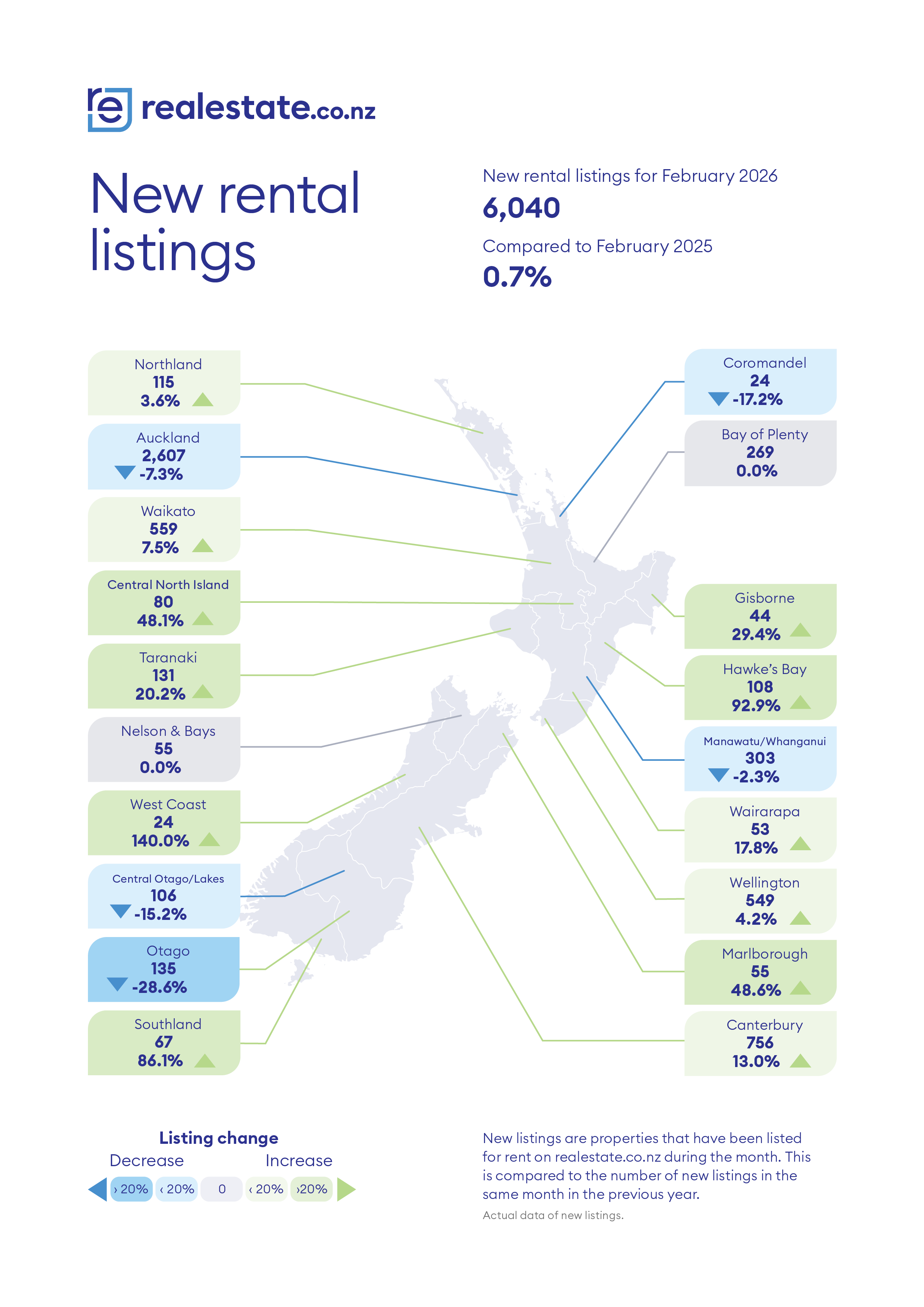
Across the country, new rental listings increased slightly by 0.7% year-on-year, with 6,040 rental properties coming onto the market in February.
However, the national picture hides large regional variations.
The West Coast experienced the biggest surge in new rental listings, with a remarkable 140% increase year-on-year.
Other regions with strong listing growth included:
-
Hawke’s Bay: up 92.9%
-
Southland: up 86.1%
In contrast, Otago saw the largest decline in listings, with available rental properties falling 28.6% compared with last year.
Rental Stock Levels Increase Nationwide
Overall rental stock across New Zealand increased 6.2% year-on-year, rising from 7,064 properties in February 2025 to 7,504 in February 2026.
The regions experiencing the biggest growth in available rental properties included:
-
Hawke’s Bay: up 114.5%
-
West Coast: up 93.8%
-
Central North Island: up 75.4%
-
Marlborough: up 77.4%
-
Gisborne: up 60%
-
Wairarapa: up 50%
However, the supply picture in the South Island’s alpine region is moving in the opposite direction.
Falling Rental Supply Fuelling Price Growth
Rental stock levels in Otago and the Central Otago–Lakes District fell sharply, with available properties declining:
-
Otago: down 30.3%
-
Central Otago–Lakes District: down 23.9%
With fewer homes available and strong demand from tenants wanting to live and work in the region, competition for rentals continues to intensify.
As supply tightens, rental prices are responding accordingly — pushing the Central Otago–Lakes District further ahead of the rest of the country.