
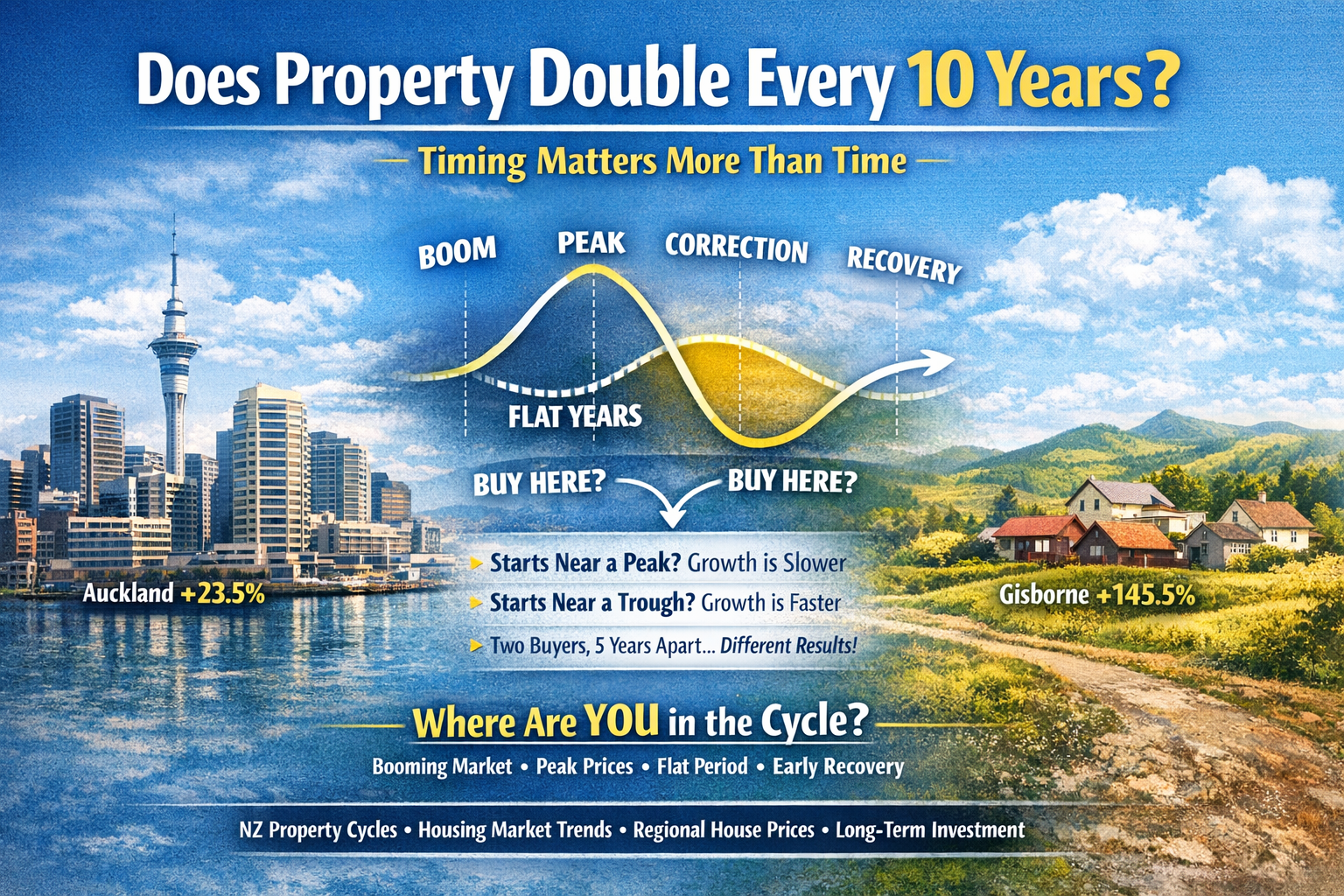
PHOTO: New Data Shows Timing — Not Time — Is What Matters
For decades, a simple phrase has shaped Kiwi property thinking: “Property doubles every 10 years.”
It’s repeated at barbecues, investment seminars, and family dinners as if it were a law of physics. But new data from realestate.co.nz shows that this long-held belief didn’t stack up in the most recent property cycle — and more importantly, it depends entirely on when your 10-year period begins.
The National Picture: No Doubling This Time
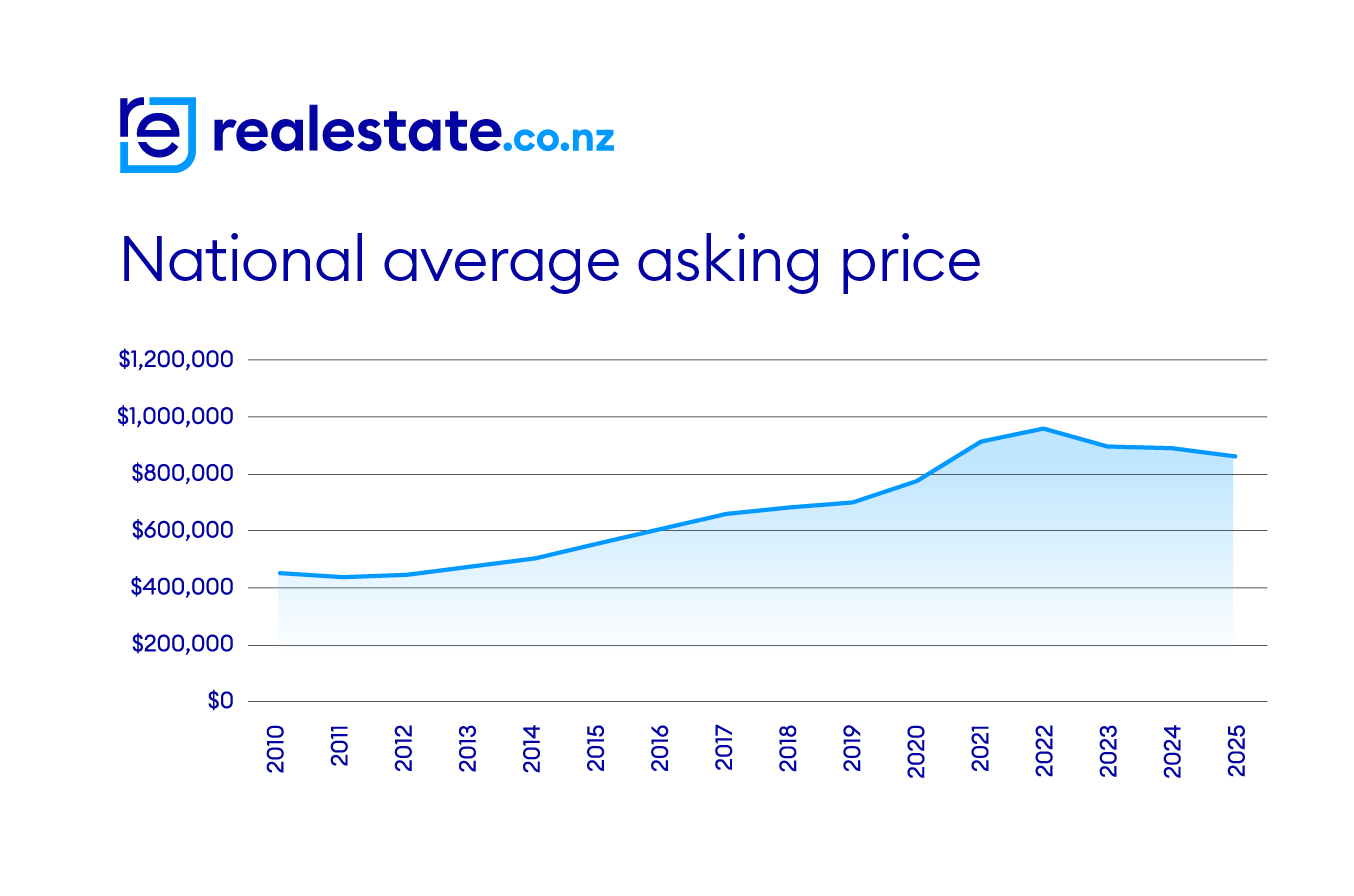
Between 2015 and 2025, New Zealand’s national average asking price rose 55.1%, increasing from $556,931 to $863,747.
Does property double in a decad…
That’s solid growth — but nowhere near a doubling.
This decade included:
-
A late-cycle upswing
-
A pandemic-fuelled boom
-
A sharp correction
-
Rising interest rates
-
Tightened lending rules
In other words, a full property cycle, not a straight line.
Why the “10-Year Rule” Often Fails
The problem with the rule isn’t maths — it’s timing.
Property markets move in cycles, typically spanning 10–15 years, made up of:
-
Growth phases
-
Peaks
-
Plateaus
-
Corrections
-
Recoveries
If your 10-year window starts near a peak, returns are often muted.
If it starts near a trough, returns can look spectacular.
That means:
Two homeowners buying the same house 5 years apart can experience wildly different “10-year” outcomes.
https://www.propertynoise.co.nz/sponsored-looking-for-a-real-estate-database-from-99-plus-gst-flash-sale/
Regional Winners: Where Prices Really Did Double
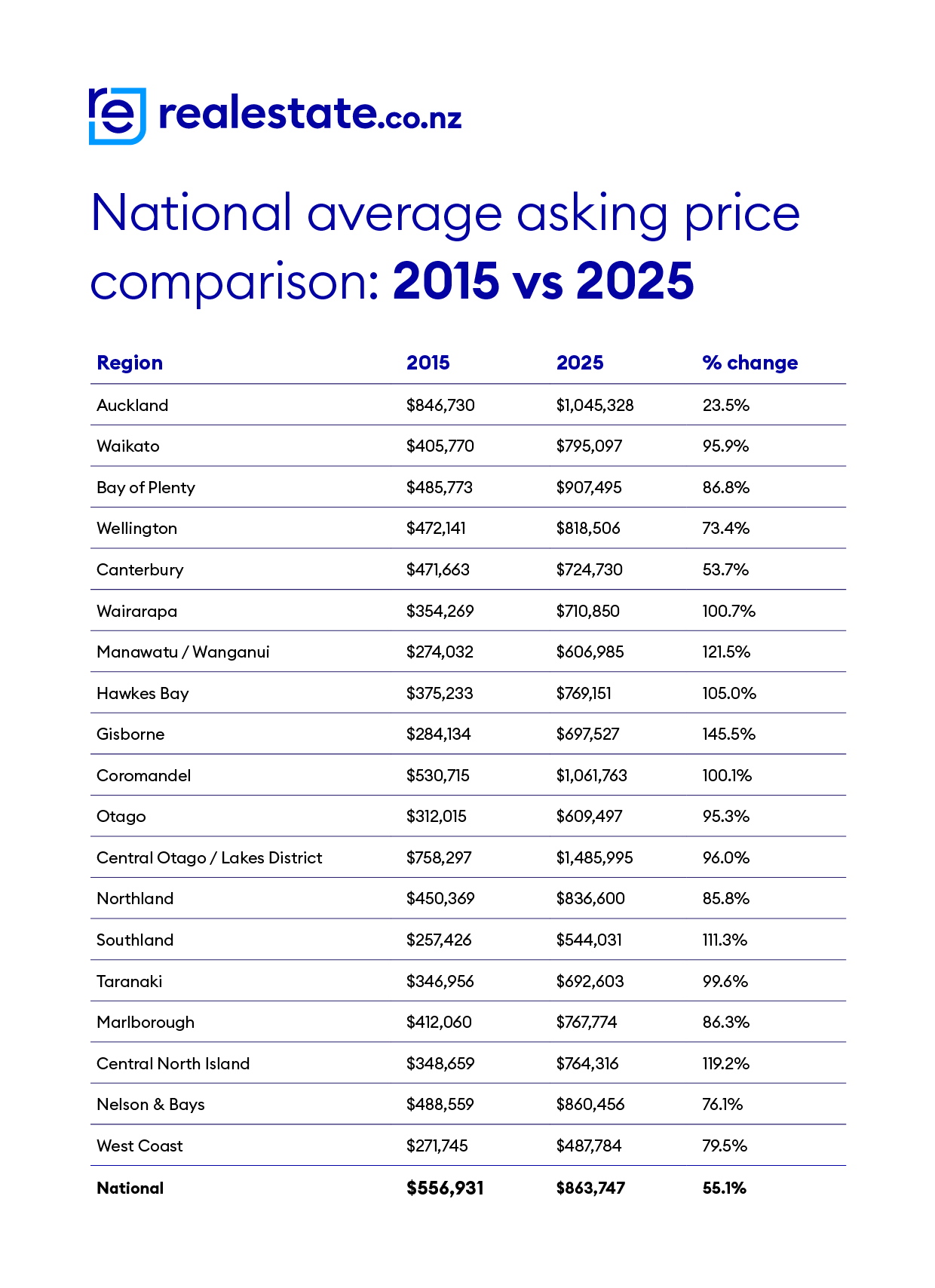
While the national average fell short, seven of New Zealand’s 19 regions did double over the last decade — proving that location matters as much as timing.
Does property double in a decad…
Top performers (2015–2025):
-
Gisborne: +145.5% (from $284,134 to $697,527)
-
Manawatū/Whanganui: +121.5%
-
Central North Island: +119.2%
-
Southland: +111.3%
-
Hawke’s Bay: +105.0%
-
Wairarapa: +100.7%
-
Coromandel: +100.1%
These regions benefited from:
-
Lower starting prices
-
Post-COVID migration
-
Lifestyle demand
-
Infrastructure spillover
The Big Cities Tell a Different Story
Among the main centres, Auckland delivered the weakest growth over the decade:
-
Auckland: +23.5% (from $846,730 to $1,045,328)
By contrast:
-
Waikato: +95.9% (nearly doubling)
High starting values, affordability ceilings, and policy constraints all played a role in holding back big-city growth during this cycle.
Property Cycles Matter More Than Headlines
According to realestate.co.nz spokesperson Vanessa Williams, the idea of guaranteed doubling oversimplifies reality.
Does property double in a decad…
Property growth is:
-
Uneven
-
Non-linear
-
Cycle-driven
Buying near the top of a cycle often leads to a long flat period.
Buying during a correction or early recovery can compress decades of growth into a shorter timeframe.
The 15-Year View: A Different Story Emerges
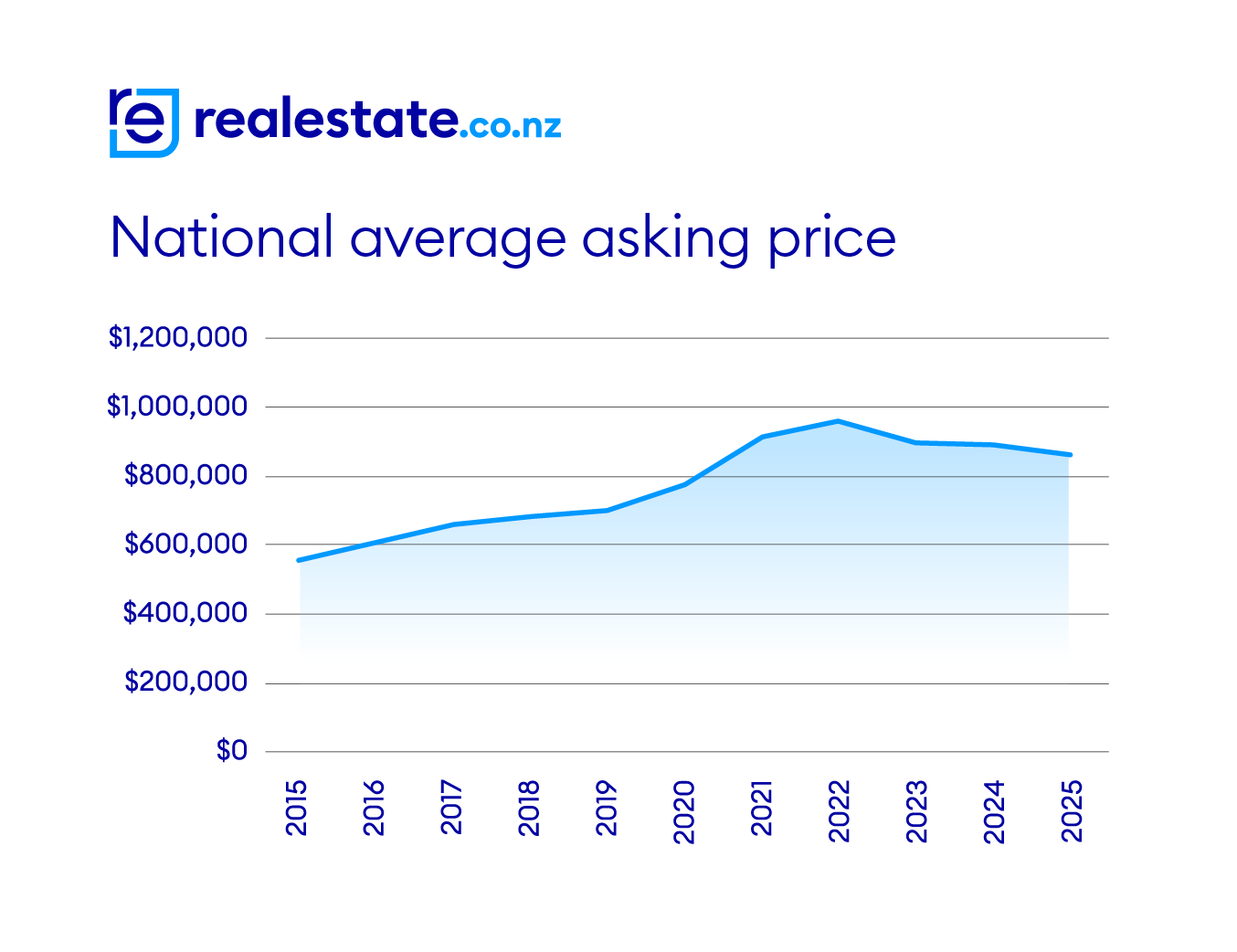
Zoom out to 15 years, and the picture improves dramatically.
Since 2010, the national average asking price has risen 91.9%, coming close to doubling.
Does property double in a decad…
Standout:
-
Central Otago/Lakes District: +125.1% (from $660,246 to $1,485,995)
This reinforces a crucial truth:
Property tends to reward time in the market, not market timing — but cycles still dictate when those rewards show up.
So… Does Property Double Every 10 Years?
Sometimes.
Sometimes not.
It depends where you start counting.
The last decade proves that:
-
The rule is not guaranteed
-
Growth depends on cycle entry point
-
Regions outperform cities in some cycles
-
Longer horizons smooth volatility
For homeowners and investors alike, the smarter question isn’t “Will it double?”
It’s:
Where are we in the cycle — and how long can I hold?