
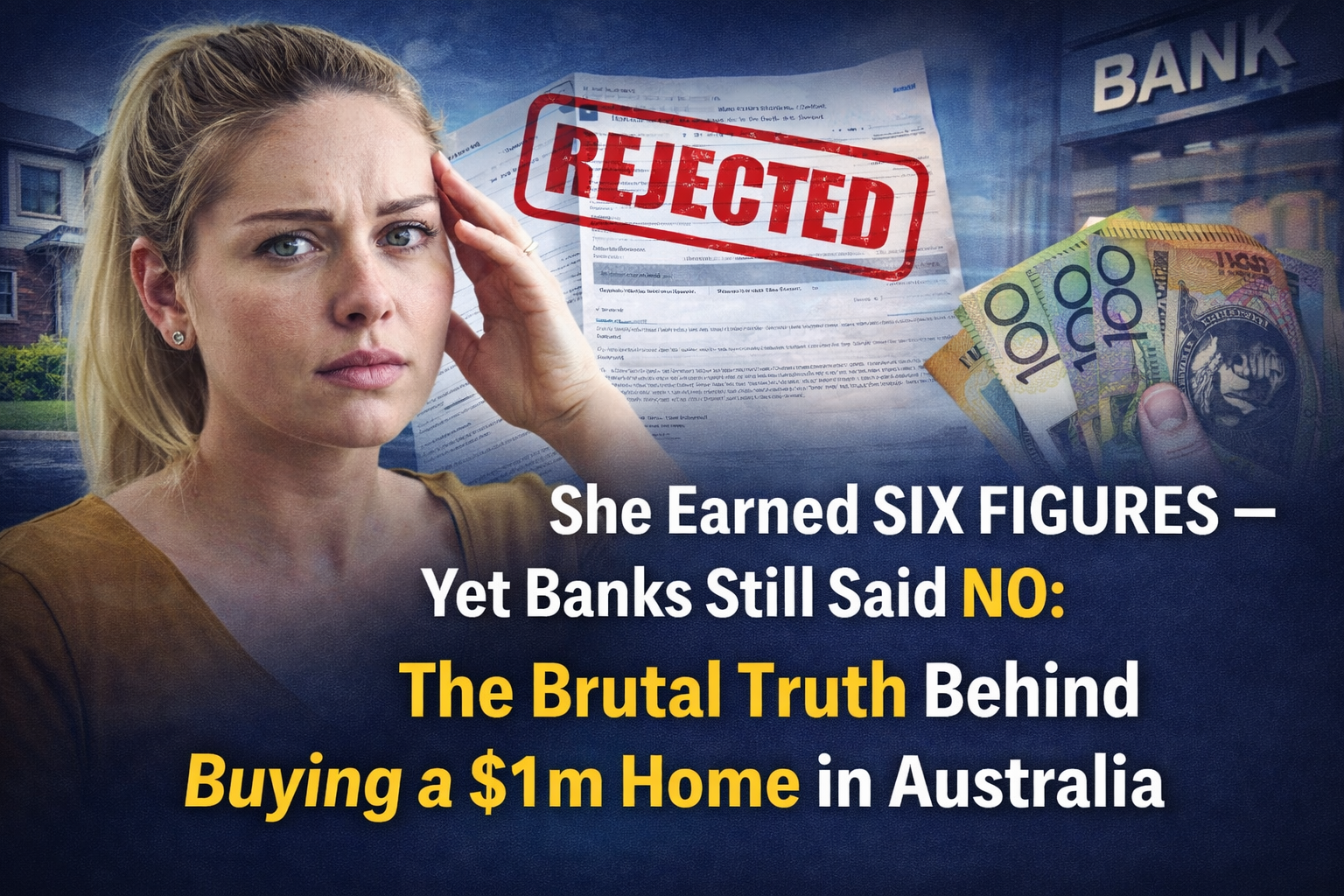
PHOTO: 🏠 A 35-year-old Aussie reveals why a high income wasn’t enough, how stigma nearly stopped her cold — and the mortgage reality few talk about. PROPERTY NOISE.
🧠 “The Hardest Part Wasn’t the Deposit — It Was the Bank”
When most Australians imagine the struggle of buying a first home, they think of saving a deposit, rising prices, or competition at auctions.
But for Emily Mai, a high-earning Australian who bought her first property in Melbourne, the biggest obstacle wasn’t money at all.
👉 It was getting a bank to say yes.
Despite earning well into six figures and having a 20% deposit, Emily says her profession — and how banks view “non-traditional income” — made home ownership far harder than expected.
Unlock 1.2 Million+ Aussie Business Contacts — No Subscriptions, No Limits
🏡 Her First Home: Deposit Ready, Income Strong — Still Rejected
In 2019, Emily purchased a four-bedroom townhouse in inner-Melbourne for $640,000, just before the pandemic reshaped the housing market.
On paper, she was the kind of borrower banks say they want:
✔️ High income
✔️ 20% deposit
✔️ Stable earnings
Yet she quickly learned that how you earn matters just as much as how much you earn.
🏦 Why the Big Banks Wouldn’t Touch Her
Emily works as a sole trader in the adult entertainment industry — a legal profession in Australia — but one that still carries significant stigma in traditional lending circles.
“My mortgage broker told me straight away — we’re not even trying the big four,” she said.
Why?
Major banks require two years of consistent income for sole traders
Rejection from one bank can hurt future applications
Non-PAYG income is heavily scrutinised
Certain industries face informal risk profiling
Even with consistent earnings, she was advised not to risk a formal rejection.
🤝 The Broker Who Changed Everything
Emily says she would not have become a homeowner without a mortgage broker.
Instead of major banks, her broker targeted smaller lenders with more flexible income policies — and that’s where she finally secured approval.
“If I didn’t have a broker, I would have had no chance.”
👶 Second Property, Same Problem — Even With Higher Income
A few years later, Emily became a mum and decided to:
Turn her first home into an investment property
Use the equity to upgrade to a family home
Purchase a $1 million house near good schools
By 2022, her income had increased significantly — but once again, she hit the same wall.
📉 When Earning More Actually Hurts Your Loan Application
Counter-intuitively, Emily learned that higher income doesn’t always help.
Banks cared less about how much she earned and more about:
Income predictability
Length of history
Consistency year-to-year
“My income went up — but that wasn’t a good thing.”
With only 12 months of higher earnings, many lenders still said no.
🏦 The One Bank That Said Yes
Eventually, her broker identified a lender willing to accept 12 months of income history — something most banks refuse.
That lender? ANZ, which ultimately approved her loan.
She successfully purchased a four-bedroom family home with a backyard for $1 million, while keeping her original property as an investment.

Ms Mai claims that when she spoke with a mortgage broker she was immediately advised not to seek approval from any of the major banks. Picture: Supplied
⚠️ The Fear Many Self-Employed Aussies Don’t Talk About
Beyond loans, Emily raised another issue few discuss publicly: bank account freezes.
She says she knows other workers in her industry who have had:
Accounts frozen
Access to funds restricted
Weeks of delays proving income legality
To protect herself, Emily:
Set up a company structure
Paid herself as an employee
Used separate bank accounts
Worked with a financial planner
As a single mum with two mortgages, she says she couldn’t afford financial disruption.
💬 “If I Was Employed, I’d Have Been Approved for $500k More”
One of the most eye-opening moments came when lenders told her bluntly:
“If you earned this income as an employee, we’d lend you significantly more.”
Despite earning around $400,000 last financial year, Emily says self-employment meant she was approved for hundreds of thousands less than a salaried worker on the same income.
💰 High Income ≠ Feeling Rich
Despite headline-grabbing earnings, Emily says she doesn’t feel wealthy.
Why?
35–40% goes to tax
Two mortgages to service
Superannuation paid manually
Investments into shares and long-term assets
“Half my money is going into the future.”
She said it was ‘eye-opening’ to learn how much more she could have borrowed if she worked for somebody else. Picture: Supplied

🏠 A Harsh Reality for Younger Buyers
Emily says she feels fortunate, not privileged — especially watching friends struggle.
“I have married friends earning six figures who still can’t get in.”
With Australia’s housing crisis squeezing buyers in their 20s and 30s, her story highlights a harsh truth:
👉 Income alone doesn’t determine borrowing power. Structure does.
🧠 The Bigger Lesson for Buyers
Emily’s experience shows:
Mortgage brokers matter more than ever
Non-traditional income faces hidden barriers
Banks prioritise certainty over scale
Self-employed borrowers must plan early
For many Australians, the system isn’t broken — but it isn’t neutral either.
SOURCE: NEWS.COM.AU