PHOTO: 🏠 Property Market | ⚖ Consumer Protection | 📊 Real Estate Transparency | 🇦🇺 Housing 2026
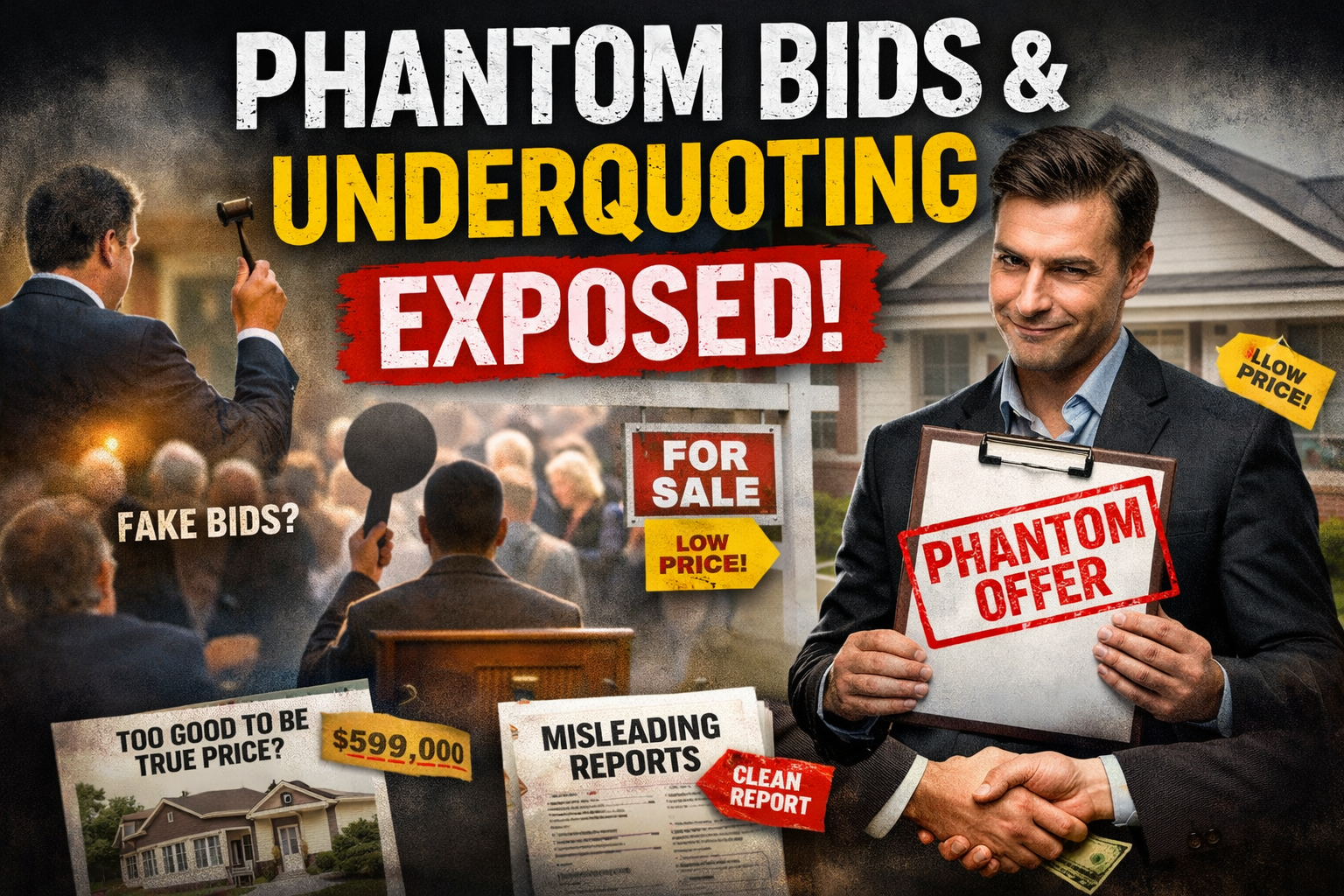
More than one in four property buyers say they’ve encountered questionable — and in some cases illegal — behaviour from real estate agents, including phantom offers, fake auction bids and significant underquoting.
A new survey by Finder reveals 27% of respondents reported experiencing what they describe as “dodgy” tactics during a property purchase.
The findings raise fresh concerns about transparency and accountability in Australia’s housing market.
📉 The Most Common Complaints
According to Finder’s survey of 1,010 respondents, the most frequently reported issues were:
-
Inflated price expectations to secure listings – 10%
-
Significant underquoting – 9%
-
Agents allegedly lying about competing offers (phantom offers) – 8%
-
Fake bidding at auction – 8%
-
Digitally enhanced or misleading photos – 8%
-
Failure to disclose zoning or legal issues – 6%
-
Conflicts of interest – 6%
-
Misleading building and pest reports – 5%
-
Deposits allegedly paid with illegal cash – 4%
Finder’s Head of Consumer Research, Graham Cooke, says buyers need to remain cautious.
“Buying a home is the biggest purchase most Australians will ever make, yet many walk into negotiations where the deck is stacked against them.”
8 per cent of survey respondents allegedly witnessed fake bidding at an auction Picture: Istoc

🎯 Underquoting and Phantom Bids: Why They Matter
Underquoting occurs when properties are advertised below the likely selling range to attract more bidders.
Phantom offers and fake bidding, if proven, can distort market competition and push buyers beyond fair value.
Cooke says price guides should never be taken at face value.
“Agent guide prices are often a fantasy designed to push as many buyers as possible into the system.”
⚖ Regulatory Crackdowns Underway
Recent enforcement action suggests regulators are taking complaints seriously.
In Queensland, a Gold Coast agent was prosecuted by the Queensland Office of Fair Trading and sentenced to a suspended prison term after dishonestly transferring more than $500,000 of client funds.
The court heard 592 transactions were involved.
In New South Wales, the NSW Fair Trading launched a public “Name and Shame” register, allowing consumers to check an agent’s disciplinary record.
Inspectors issued “please explain” notices to 25 agencies over potentially misleading price estimates — with one case showing a 150% gap between the advertised guide and sale result.
In Victoria, Consumer Affairs Victoria fined more than 50 agencies for failing to advertise fixed rental prices, a breach that can encourage illegal rental bidding.
🧠 Finder’s Red Flags for Buyers
Cooke says buyers must take responsibility for due diligence.
Key recommendations include:
✔ Verify Everything
Request documentation for major claims such as renovations or structural repairs.
✔ Conduct Independent Inspections
Hire your own building and pest professionals — not one suggested by the agent.
✔ Research Comparable Sales
Use independent sales data to evaluate whether price guides are realistic.
✔ Understand the Agent’s Role
Agents legally represent the seller, not the buyer.
✔ Trust Your Instincts
If something feels off, pause and investigate further.
📊 Why Transparency Matters in 2026
As housing affordability pressures continue and competition remains strong in major cities, transparency in property transactions is under increasing scrutiny.
With digital platforms amplifying buyer awareness and regulators stepping up enforcement, industry accountability is likely to remain a key focus throughout 2026.
For buyers, knowledge remains the strongest defence.
SOURCE: NEWS.COM.AU