
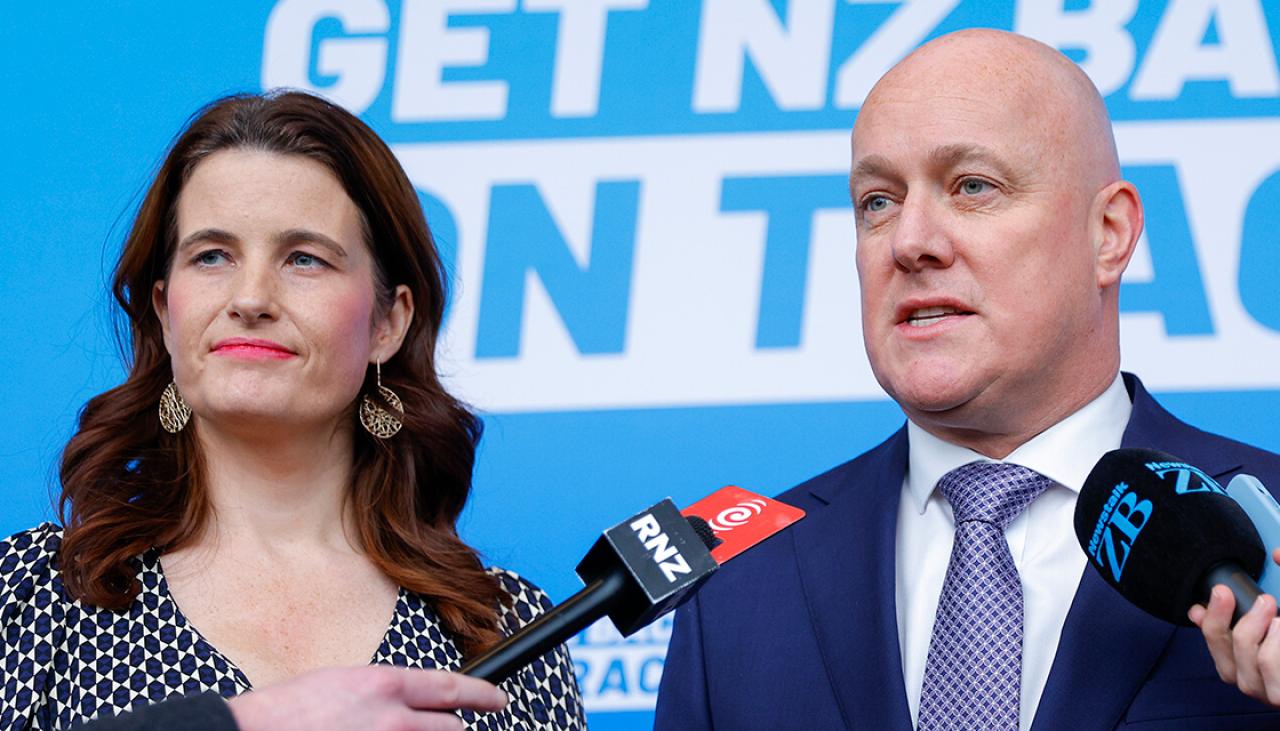
PHOTO: PROPERTY NOISE
New Zealand heads to the polls on Saturday, 7 November 2026 — and despite the hot takes, the data says one thing loudest: this election is still wide open, and the result may come down to coalition maths rather than a clean “major-party win.”
Across the most recent major polls, National and Labour are trading leads depending on the pollster, while NZ First remains in (or near) double digits, giving Winston Peters the kind of leverage that can decide governments under MMP.
📊 The polling picture right now: “close race” is the only honest headline
Here’s the key point: different reputable polls are telling different stories, and all of them matter.
-
1News–Verian (7–11 Feb 2026): National 34, Labour 32, Greens 11, ACT 9, NZ First 10, TPM 2.
-
The Post/Freshwater Strategy (6–12 Feb 2026): National 30, Labour 37, NZ First 11, Greens 10, ACT 6.
-
Taxpayers’ Union–Curia (1–3 Feb 2026): Labour 34.1, National 31.3, NZ First 10.5, Greens 10.3, ACT 6.7 — projecting a hung Parliament on their seat maths.
-
Roy Morgan (6–26 Jan 2026): National-led bloc on 52% vs 44% for the Labour-led bloc; projected 65–55 seats to National/ACT/NZ First.
-
RNZ–Reid Research (Jan 2026): reported as returning the coalition with a narrow majority (and highlights NZ First strength).
Translation: nobody can credibly claim the winner is “locked in.” The range of outcomes runs from National-led return to Labour-led change to a hung Parliament.
🧩 Why MMP means “who wins” might not be the real question
In NZ elections, the headline isn’t just “largest party” — it’s who can get to 61 seats (or survive confidence-and-supply).
Right now, polling suggests three realistic endgames:
✅ Scenario A: National-led coalition returns (National + ACT + NZ First)
This remains the simplest path if National stays mid-30s and NZ First holds near/above 10 — which multiple polls currently show.
✅ Scenario B: Labour-led change (Labour + Greens + TPM)
This becomes viable if Labour sustains a clear lead (as seen in The Post/Freshwater poll) and the Greens stay strong.
⚠️ Scenario C: Hung Parliament = negotiations decide the government
Taxpayers’ Union–Curia’s seat projection literally lands on 60–60, meaning one shift, one threshold change, or one minor-party surge can flip power.
👑 The kingmaker factor: NZ First’s leverage is real (again)
Whether you love or loathe it, NZ First’s polling strength is the single biggest structural reason this election is unpredictable.
-
NZ First is at/around 10% in multiple recent polls.
-
RNZ has highlighted NZ First’s climb and its impact on coalition viability.
Under MMP, that means:
-
A small swing in NZ First support can make or break the right bloc’s majority, and
-
If the major parties stay close, NZ First becomes the pivot point.
🧠 My evidence-based prediction: the most likely outcome (as of late Feb 2026)
Based on the balance of polling (not one poll), the most probable result today is:
A National-led government is slightly favoured — but not safe.
Why “slightly favoured”?
-
National is consistently competitive and sometimes ahead.
-
The current coalition pathway exists in multiple polling sets, including one showing a clear National-led bloc advantage.
-
But: other polls put Labour in front, and at least one seat model produces a hung Parliament.
So the honest call is:
-
National-led return: slightly more likely than Labour-led change
-
Hung Parliament: a very live risk
-
NZ First: could decide the final shape either way
🔍 What will decide it between now and 7 November?
💸 1) Cost of living + the “permission structure” to change government
Polling commentary shows cost of living remains a dominant voter concern (and rising in salience).
🏠 2) Housing and economic credibility
International coverage of the election date announcement explicitly frames housing and cost of living as top issues.
🧨 3) Coalition tensions and culture-war fatigue
Waitangi coverage and broader reporting point to political tension around Treaty issues and public sentiment — factors that can mobilise or depress turnout.
🗺️ 4) Threshold and “wasted votes”
If minor parties hover around 5%, the distribution of seats can change dramatically. Roy Morgan explicitly notes the role of minor parties outside Parliament and overhang mechanics.
✅ Bottom line
If the election were held this week, I’d call it National-led by a nose — but the numbers scream volatility, and the coalition map says no side can relax.
Under MMP, the “winner” may be the party best at coalition management, not the one with the flashiest headlines.