PHOTO: The Market Didn’t Bolt… But It’s Definitely Stretching Its Legs. PROPERTY NOISE
New Zealand’s property market has trotted cautiously into 2026 — not a full-blown gallop, but far from standing still.
Fresh data from realestate.co.nz reveals a mixed but intriguing picture:
-
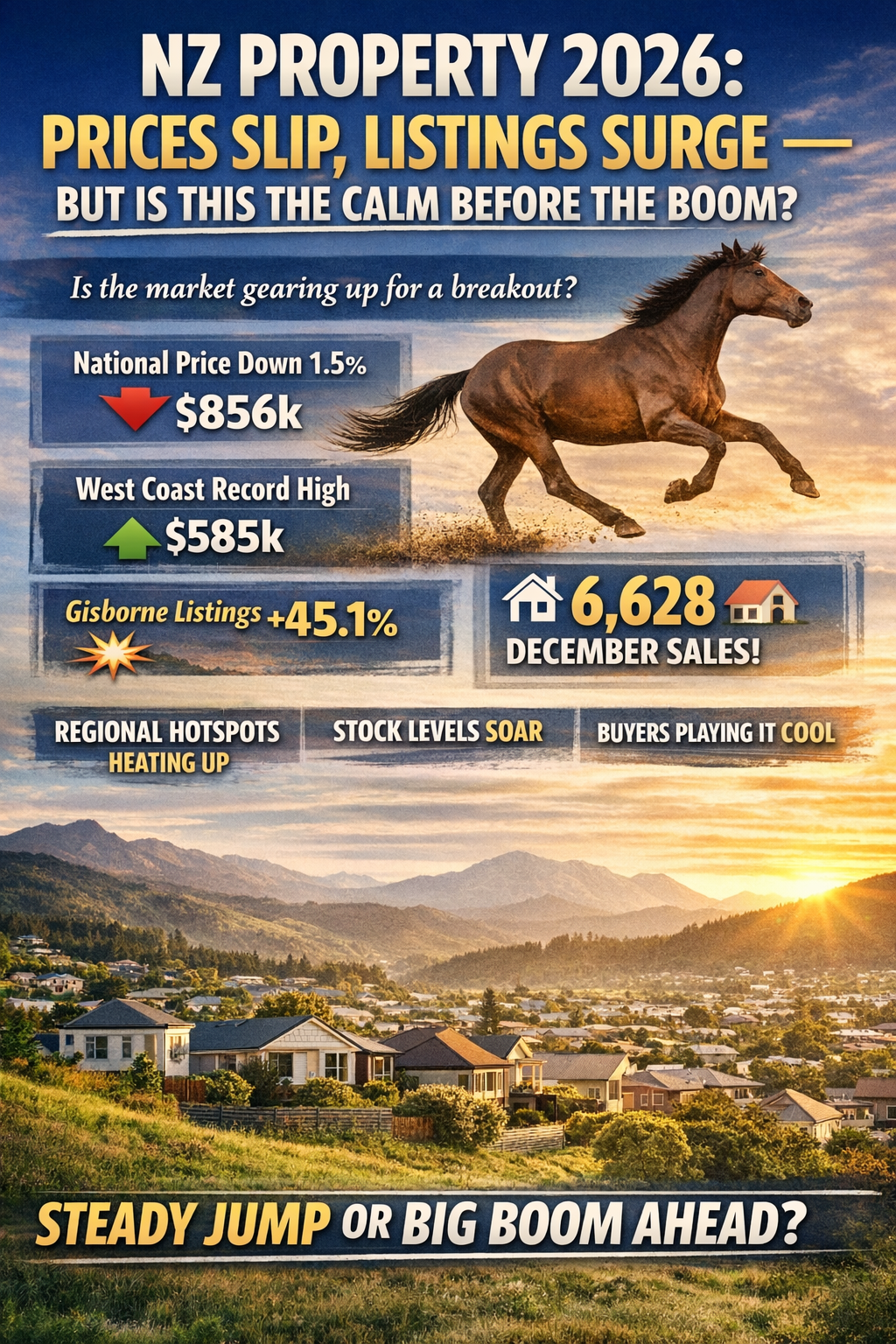
📉 National average asking price down 1.5% year-on-year to $856,730
-
📈 West Coast hits an all-time high of $585,881
-
🚀 Gisborne listings explode 45.1% year-on-year
-
🏠 December 2025 closes strong with 6,628 sales
It’s not a boom. It’s not a bust. It’s a market quietly repositioning.
💰 National Prices Dip — But Regional Highs Tell a Different Story
The national average asking price softened slightly, dropping 1.5% compared to January 2025. But beneath that headline figure, regional markets are telling very different stories.
🌊 West Coast Steals the Spotlight
-
Record average asking price: $585,881
-
Up 17.4% year-on-year
🌅 Other January Highs:
-
Gisborne: $705,145 (+8.2%)
-
Canterbury: $719,184 (+0.2%)
-
Central Otago/Lakes District: $1,621,022 (+12.0%)
Meanwhile, Marlborough experienced the sharpest fall:
-
Down 12.6% to $676,223
-
First time below $700k since October 2021
What It Means
While the national average has eased, lifestyle-driven regions are showing resilience and renewed confidence. Buyers are clearly still prepared to pay for location, long-term value, and lifestyle appeal.
Website traffic backs this up — visits to realestate.co.nz are up 12.4% year-on-year, signalling strong buyer engagement even if decisions are taking longer.

📋 Listings: Slow National Growth… But Regional Surges
January saw 9,019 new listings, up a modest 1.3% year-on-year.
But zoom in, and the story sharpens.
🔥 Regions With Double-Digit Growth:
-
Gisborne: +45.1% (74 new listings)
-
Hawke’s Bay: +21.8% (319 listings)
-
West Coast: +14.3% (80 listings)
-
Northland: +10.0% (296 listings)
These regions have hit 2026 running, suggesting vendors see opportunity.
📉 Regions That Pulled Back:
-
Marlborough: −27.4%
-
Central Otago/Lakes District: −21.4%
-
Coromandel: −18.3%
-
Wairarapa: −16.7%
-
Otago: −14.2%
-
Southland: −12.0%
-
Central North Island: −10.2%
Holiday hotspots and parts of the South Island appear more cautious, with some sellers potentially waiting for clearer economic signals.

🏠 Stock Levels Hit Decade High — Buyers Hold the Power
Total stock rose 2.3% year-on-year to 33,149 properties.
This marks the first January above 33,000 listings since 2014 — a major shift in supply dynamics.
Notable Stock Changes:
-
Gisborne: +15.1% (only region with double-digit stock growth)
-
Auckland, Hawke’s Bay, Wellington and Northland all recorded modest increases.
-
Southland: −19.1% (seventh consecutive monthly decline)
-
Central Otago/Lakes District: −15.1%
-
Otago: −10.3%
The Big Takeaway
There’s more choice for buyers than we’ve seen in years.
And buyers know it.
Banks are busy with pre-approvals, but purchasers are moving carefully — possibly waiting on further OCR cuts or political signals. The risk? Sitting on the sidelines too long could mean missing strong stock at realistic prices.
📊 December Sales Prove the Market Still Has Muscle
Despite the cautious tone, December delivered:
-
6,628 properties sold
-
Up from 5,511 in December 2024
-
Up from 5,142 in December 2023
-
Up from 4,309 in December 2022
That’s one of the strongest Decembers in recent memory.
Properties are selling. Just not frantically.

🎯 2026 Outlook: Steady Jump… Not a Sprint
The New Zealand property market is not rebounding dramatically — but it’s far from stalled.
We’re seeing:
✔ Regional momentum
✔ Vendor confidence in key lifestyle markets
✔ Increased buyer research activity
✔ Strong recent sales volumes
✔ Higher stock levels creating opportunity
It’s a patchy but promising start.
Some regions are accelerating. Others are waiting for clearer signals.
National averages show stability — but local market dynamics are now driving the real story.
And in 2026, that’s where the smart money will be watching.