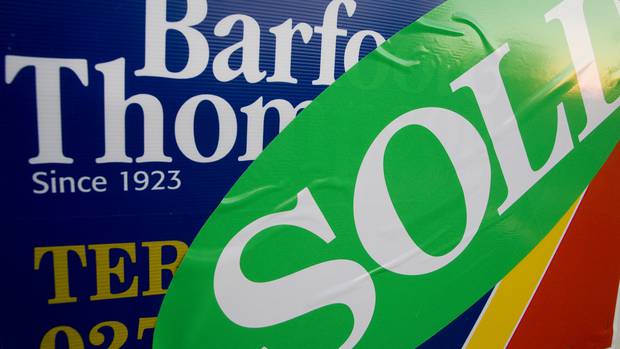
PHOTO: The family-owned agency has become one of the most powerful forces in New Zealand property, FILE
🏠 One in Every Three Auckland Homes
When most people think about Auckland real estate, one name immediately comes to mind: Barfoot & Thompson.
The family-owned agency has become one of the most powerful forces in New Zealand property, regularly claiming it sells around one in every three residential homes in Auckland, making it significantly larger than any competing brand.
In an industry dominated by franchise groups, Barfoot & Thompson has carved out a unique position that continues to raise an interesting question:
Is Barfoot & Thompson becoming too dominant for its competitors to catch?
NEW | Access New Zealand’s Ultimate Real Estate Agent Database — 18,000+ Agents & Agencies Included
📊 Just How Big Is Barfoot?
The numbers are impressive.
Barfoot & Thompson now operates with:
- More than 80 branches across the Upper North Island.
- More than 1,800 salespeople.
- More than 14,000 managed rental properties.
- More than 11,000 residential sales completed during 2025.
The company consistently describes itself as Auckland’s leading real estate agency, with a market share of approximately one-third of all residential transactions.
For perspective, few real estate brands anywhere in the world command such a large share of a major metropolitan market.
🔥 Why Sellers Continue Choosing Barfoots
One reason behind Barfoot’s dominance is its structure.
Unlike traditional franchise networks, Barfoot operates as a single company where listings are shared across the entire sales force.
That means a property listed in Howick can be sold by an agent from Albany, Remuera or Manukau without franchise boundaries getting in the way.
Supporters argue this creates:
✅ Larger buyer pools.
✅ More agent collaboration.
✅ Greater exposure for listings.
✅ Stronger competition among buyers.
For vendors, the argument is simple: more buyers potentially means a higher sale price.
📈 Auckland’s Market Recovery Is Helping
The company’s dominance comes at a time when Auckland’s housing market is showing signs of stabilisation.
During 2025, Barfoot completed more than 11,000 sales, its highest annual sales volume in four years. Sales volumes increased while listing numbers reached their highest levels in decades.
The company has also reported stronger activity during parts of 2026, including one of the busiest Januarys seen in recent years.
As transaction volumes increase, the biggest agencies often benefit disproportionately because they already possess the largest databases of buyers and sellers.
🏢 Which Barfoot Offices Are Leading The Pack?
While Barfoot does not publicly release a detailed ranking of every office by transaction volume, industry observers consistently point to several powerhouse branches including:
- Remuera
- Howick
- Manukau
- Albany
- Milford
- Highland Park
- Millwater
Some of Auckland’s highest-performing individual agents also operate from these offices, regularly appearing in industry rankings and sales leaderboards.
The growth of northern Auckland and eastern suburbs has helped several branches become major contributors to the group’s overall success.
🤔 Is Dominance Good For The Market?
Opinions differ.
Supporters argue Barfoot’s size provides consumers with:
- Greater marketing reach.
- Larger buyer databases.
- Extensive market knowledge.
- Consistent service standards.
Critics argue that concentration of market share can make it more difficult for smaller independent agencies to compete.
However, Auckland remains one of the most competitive real estate markets in Australasia, with major brands including Harcourts, Ray White, Bayleys, LJ Hooker and numerous independent agencies continuing to fight aggressively for market share.
💰 The Real Winner: The Consumer?
Perhaps the most important question is whether Auckland homeowners benefit.
If a seller can access thousands more buyers through a larger network, many would argue that’s a positive outcome.
On the other hand, strong competition between agencies often drives innovation, marketing improvements and service enhancements.
The reality is that Auckland’s property market remains highly competitive, and consumers continue to have plenty of choice when selecting an agency.
🔮 What Happens Next?
Barfoot & Thompson’s challenge may not be maintaining market share — it may be growing it.
With Auckland’s housing market becoming more digital, data-driven and competitive, large agencies are investing heavily in technology, marketing and customer experience.
Yet despite its size, Barfoot remains privately owned and family-controlled, something increasingly rare in modern real estate.
Whether it can continue selling one in every three Auckland homes over the next decade will depend on how effectively it adapts to changing consumer expectations and increasing competition from both traditional agencies and emerging property technology platforms.
📌 Key Takeaways
✅ Barfoot & Thompson sells approximately one-third of Auckland residential homes.
✅ The company employs more than 1,800 salespeople across 80+ branches.
✅ More than 11,000 homes were sold through the network during 2025.
✅ Its non-franchise model remains a key competitive advantage.
✅ Auckland’s market recovery is helping large agencies grow.
✅ The debate continues over whether market dominance benefits or harms competition.