
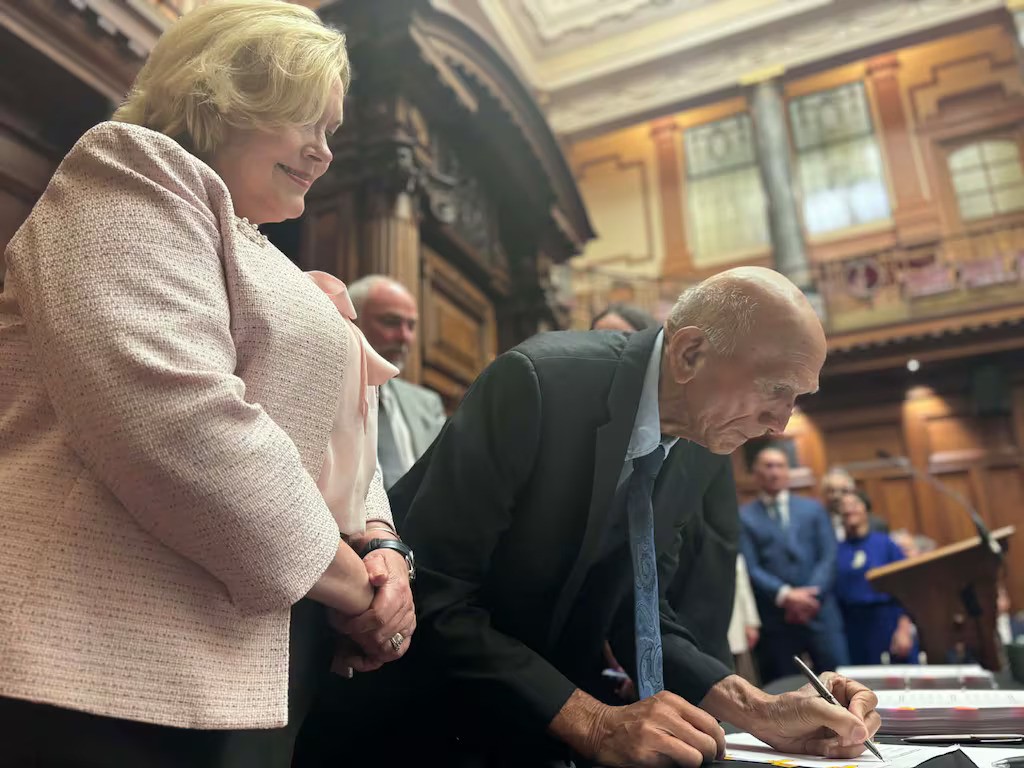
PHOTO: The historic land grievance dates back to the 1840s when the British-based New Zealand company purchased vast swathes of land with promises to Māori. Attorney-General Judith Collins and Conservation Minister Tama Potaka. RNZ
One of the largest historic land settlements in the South Island has been finalised, with nearly half a billion dollars’ worth of land and assets returned to a Māori land trust in the Tasman District, closing a grievance that dates back to the earliest years of colonial New Zealand.
The settlement covers more than 3,000 hectares of land and represents the culmination of generations of advocacy following broken promises made in the 1840s.
📜 Broken promises dating back to the 1840s
The dispute traces its origins to land purchases carried out by the New Zealand Company, a British-based enterprise that acquired vast areas of land across Te Tauihu (the top of the South Island).
At the time, the company promised that one-tenth of the land would be set aside for the original Māori owners — a commitment designed to ensure iwi retained land, livelihoods, and long-term economic security.
That promise was never honoured.
Instead, land that was meant to be reserved for Māori was sold on to settlers, leaving iwi and hapū landless and excluded from the economic growth that followed.
⏳ A fight for justice spanning generations
Descendants of the original landowners have spent more than 180 years pursuing redress, through petitions, court processes, negotiations, and Treaty settlement mechanisms.
The newly announced settlement acknowledges that the failure to honour the “tenths” promise caused intergenerational harm, including loss of land, wealth, housing opportunities, and economic independence.
The return of land and capital is seen as both a symbolic and practical step toward restoring mana and correcting historic injustice.

🌱 What the settlement includes
The settlement package includes:
🌾 Over 3,000 hectares of land across the Tasman region
💰 Assets valued at nearly $500 million
🏘️ Land suitable for housing, development, cultural use, and environmental restoration
📈 Long-term economic opportunities under Māori ownership
The assets will be held and managed by a Māori land trust on behalf of descendants, with a focus on intergenerational benefit rather than short-term gain.
🏘️ Implications for land use and development
From a property and planning perspective, the scale of the settlement is significant.
The transfer of such a large landholding into Māori ownership introduces:
New dynamics in regional land supply
Opportunities for papakāinga housing
Potential partnerships in residential, commercial, and environmental development
Long-term stewardship models rather than speculative land turnover
Industry observers note that iwi-led development often prioritises sustainability, community outcomes, and housing affordability, particularly in regions facing supply pressure.
🧭 A wider moment in New Zealand’s property history
This settlement sits within a broader national trend of addressing historic Treaty breaches, but its scale and land-based focus make it one of the most consequential for the South Island property landscape.
It also highlights the enduring impact of early colonial land transactions — and how unresolved issues from the 19th century continue to shape land ownership patterns, housing equity, and regional development today.
For the descendants involved, the settlement is not viewed as compensation alone, but as a platform for rebuilding opportunity that was denied for generations.